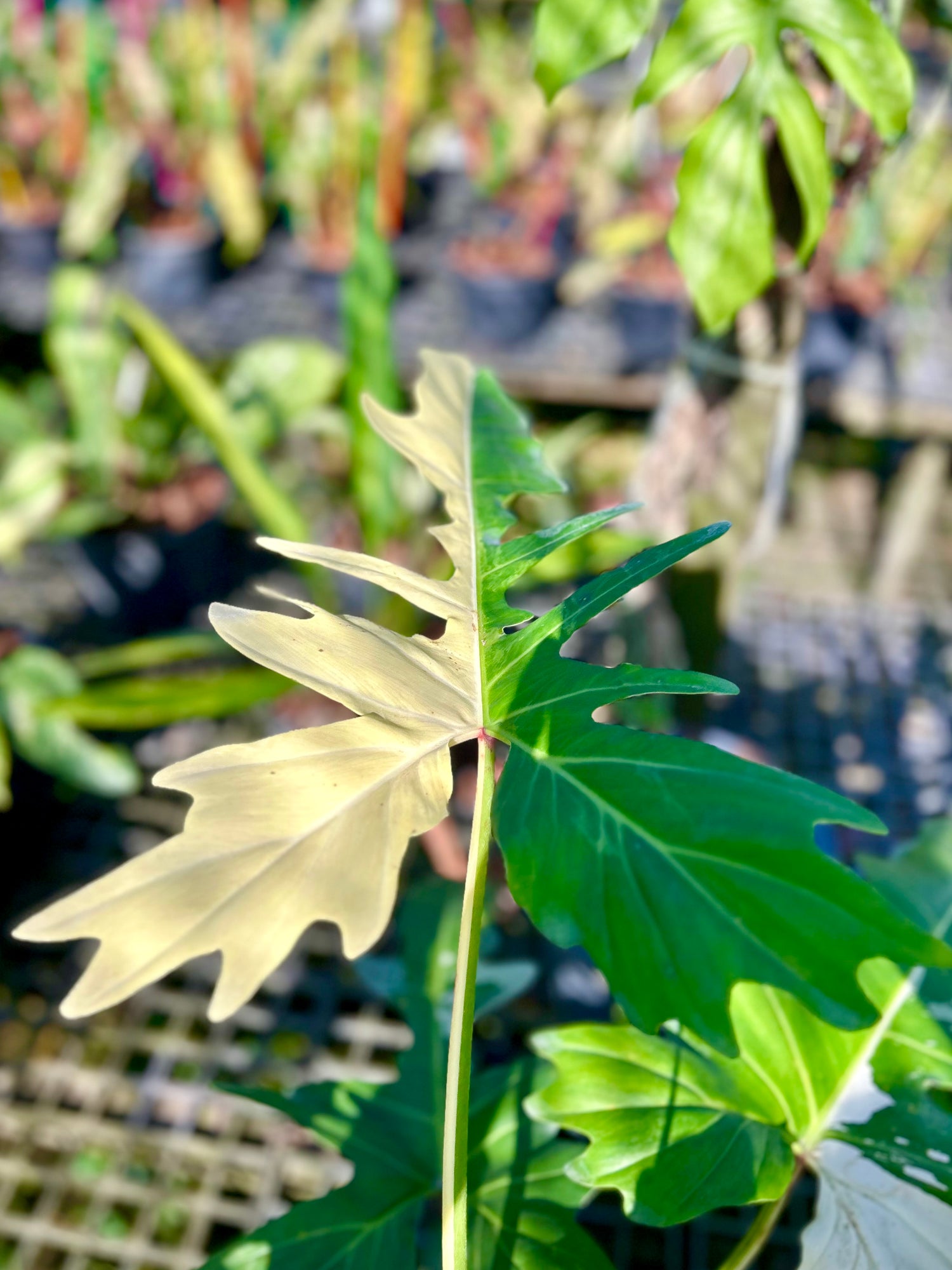

Top 3 ways to germinate these Alocasia corms/bulbs
Share
Top 3 ways to germinate these Alocasia corms/bulbs
1️⃣ The Root Starter: the most stable and safest method
Of all the techniques tested, the Root Starter is the most reliable method for germinating Alocasia corms .
Its principle is based on three fundamental elements: saturated humidity, constant heat, and no direct contact with water. The transparent pot creates a microclimate with over 90% humidity. Horticultural biochar stabilizes the environment and limits bacterial growth. The grid keeps the corm out of the water, preventing any maceration.

This combination makes it possible to drastically reduce losses and obtain consistent results, particularly in Europe where climatic variations are frequent.
Discover the Root Starter here:
https://greenandwhiteplants.com/products/root-starter
See the full tutorial:
https://greenandwhiteplants.com/pages/root-starter-tuto
2️⃣ The controlled puddle in a closed pot
This method involves maintaining a very thin layer of water at the bottom of a closed container. The corm is placed just above the water, without ever touching it.
High humidity promotes the breaking of dormancy, provided the water is regularly replenished. If it stagnates, it loses oxygen and can encourage rot.
This technique works well, but it requires careful monitoring. It is therefore slightly more variable than the Root Starter method.
3️⃣ Slightly damp sphagnum moss
Sphagnum moss should be moistened and then wrung out like a sponge. It must remain aerated and never soggy.
The main challenge is stability. With evaporation, it can become too dry and slow germination. Conversely, if it is too waterlogged and poorly oxygenated, the corm can rot.
Some people also use technical substrates like stratum. These methods can give good results, but remain highly variable depending on humidity and aeration management.
It is precisely this variability that explains the differences in success.
Why stability is key
An Alocasia corm comes out of dormancy when the temperature is between 25 and 30 °C and the humidity is high and constant.
Sudden changes slow down the decrease in abscisic acid and delay the production of cytokinins, hormones responsible for cellular recovery.
A closed, warm, humid and stable environment promotes rapid and uniform germination.

After germination: the next phase
When the roots are well developed and the first leaf appears, it is time to repot.
Discover the suitable substrate here:
https://greenandwhiteplants.com/products/substrat-alocasia-professionnel
You can also discover the rare Alocasia bulbs currently available here:
https://greenandwhiteplants.com/collections/plantes-rares
Conclusion
The three reliable methods for germinating an Alocasia corm are the Root Starter, the controlled puddle of water, and slightly moist sphagnum moss.
The difference lies in the stability of the microclimate. The more constant it is, the faster and more secure germination will be.
Join our community of rare tropical plant enthusiasts on Instagram:
https://www.instagram.com/greenandwhite_plants/ 🌿