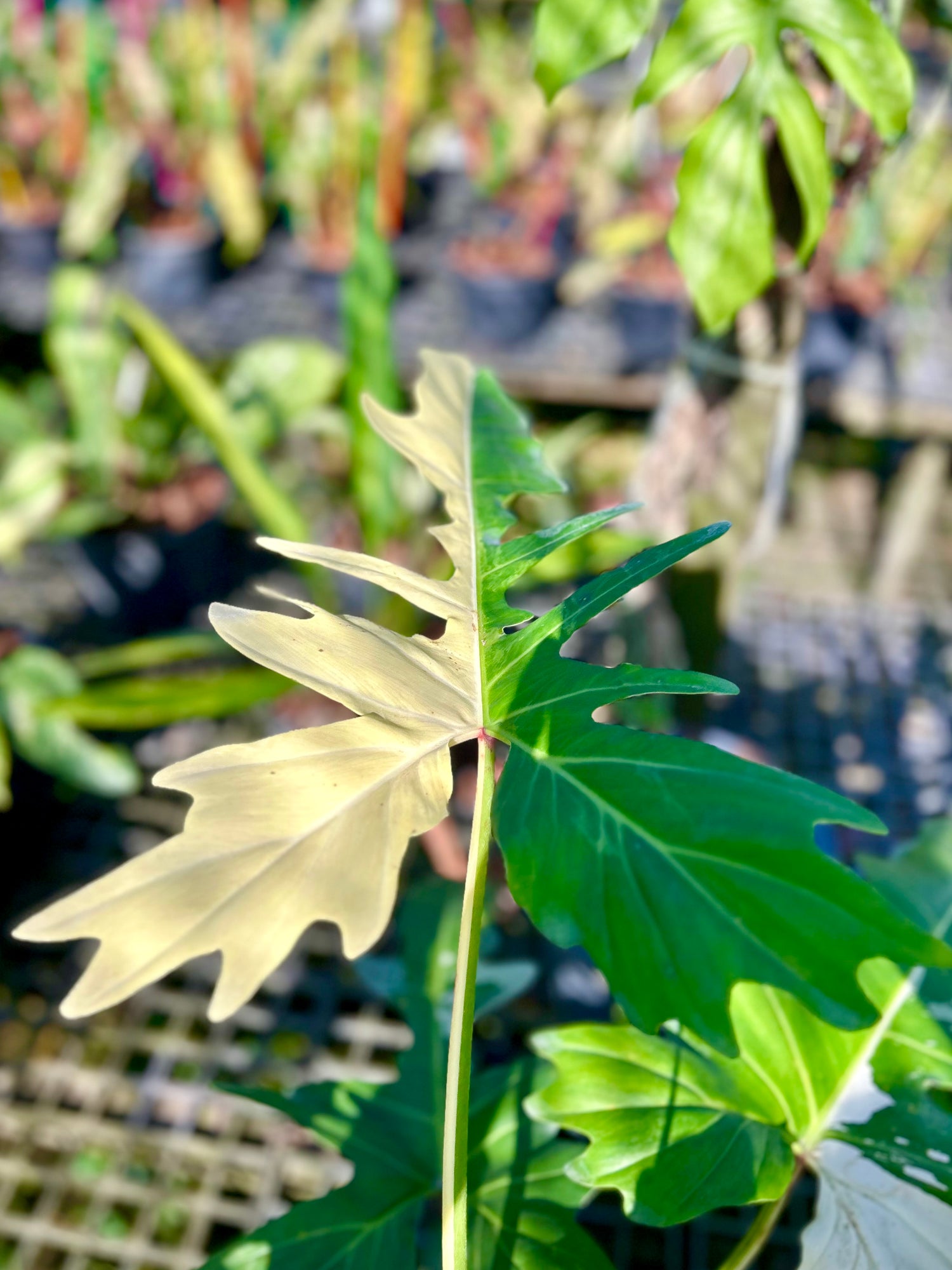


What type of potting soil should I use for repotting an Alocasia?
Why the choice of potting soil is crucial for an Alocasia
Repotting an Alocasia is never a purely aesthetic gesture.
This is a strategic operation that conditions root health, the vigor of new leaves and the stability of the plant over several years.
In Europe, many enthusiasts use universal potting soil. The problem? This type of substrate is often too fine, too compact, or lacks a stable structure.
However, a rare tropical plant in a pot needs oxygen at the root level.
Soil that is too dense quickly leads to root asphyxiation -> yellowing of the leaves -> slowed growth and therefore risk of rot.

Repotting is therefore the ideal time to correct the very foundation of the culture.
The specific root needs of Alocasia
Alocasia is native to Southeast Asia. In its natural environment, it grows in well-drained, well-aerated forest soils rich in decomposed organic matter, but moist and never waterlogged.
Its roots are sensitive. They need constant oxygen and stable humidity, so a good potting mix for Alocasia must recreate this tropical balance.
Ideal potting mix composition for repotting an Alocasia
An effective substrate does not rely on a single miracle ingredient, but on a balanced structure.
A high-performing professional blend relies on:
-
hydroponic clay pebbles
They stabilize the substrate and allow for even moisture management without excess. -
perlite
It regulates hydration and limits compaction over time. -
biochar
It contributes to the natural purification of the root environment and supports a balanced microbial environment. -
small caliber maritime pine bark
It provides a breathable structure and promotes root oxygenation. -
large caliber pumice
It ensures powerful drainage and optimal water circulation.
This type of mixture offers:
✔ Excellent ventilation
✔ Lasting stability
✔ A reduction in the risk of stagnation
✔ Improved watering management

If you wish to ensure a safe repotting with a formula specifically designed for Alocasia , you can find it here:
https://greenandwhiteplants.com/products/substrat-alocasia-professionnel
When should you repot an Alocasia?
Repotting is not an annual necessity. It should only be done when there is a genuine need.
You must intervene when the roots grow out of the drainage holes, water immediately drains through the pot, the plant stops producing new leaves, or the substrate becomes compacted and hydrophobic.
The ideal time is spring, when the plant enters its active growth phase.
How to successfully repot step by step
Good soil is not enough if the method is bad.
Here are the key steps:
-
Choose a pot that is 20 to 30% larger.
-
Make sure it is pierced.
-
Place a drainage layer at the bottom.
-
Add your substrate
-
Replace the root ball without burying the crown.
-
Water lightly to stabilize the mixture.
The first watering should moisten without soaking.
Common mistakes when repotting
Many collectors lose their plants in the weeks following repotting.
The most common mistakes:
-
Use a pot that is too big
-
Water thoroughly immediately after
-
Keeping potting soil that is too fine
-
Leaving water to stagnate in the saucer
A structured substrate limits these risks.
To explore other solutions adapted to rare tropical plants in Europe , you can consult all the available mixtures here:
https://greenandwhiteplants.com/collections/substrats
What should I do if the leaves turn yellow after repotting?
Slight post-repotting stress is normal.
However, if the leaves become:
-
Yellow
-
Soft
-
Brown
We need to check:
-
Drainage
-
Watering frequency
-
The brightness
In most cases, the problem stems from an excess of water combined with a substrate that is too compact.
And what about the corms when repotting?
Repotting is often when you discover corms.
These small structures allow for multiplication.
They must be planted in:
-
A very aerated substrate
-
A suitable container
-
Controlled humidity

To promote secure root development during this delicate phase, you can use a pot designed for young plants, such as this one:
https://greenandwhiteplants.com/products/root-starter
Light and environment after repotting
After repotting, place your Alocasia:
-
In bright light without direct sunlight
-
At a stable temperature (20–28°C)
-
Away from drafts
Avoid:
-
Radiators
-
Underfloor heating
-
Thermal shocks
Allow the plant to adapt before any fertilization.
Why a technical soil changes everything
Good soil for Alocasia does more than just make the plant grow.
It secures the roots, stabilizes humidity, reduces watering errors, and allows for faster growth. When growing rare tropical plants indoors , the substrate is your main key to success.
In summary
Repotting an Alocasia is not a formality.
It's an investment in its longevity.
The ideal potting soil should be:
-
Aerated
-
Draining
-
Stable
-
Structure
-
Sustainable
The combination of clay pebbles, perlite, biochar, pine bark and pumice recreates a root environment close to natural tropical conditions.

Mastering this parameter means transforming a fragile plant into a true tropical centerpiece.
To learn more about growing Alocasia and rare tropical plants , join our community: