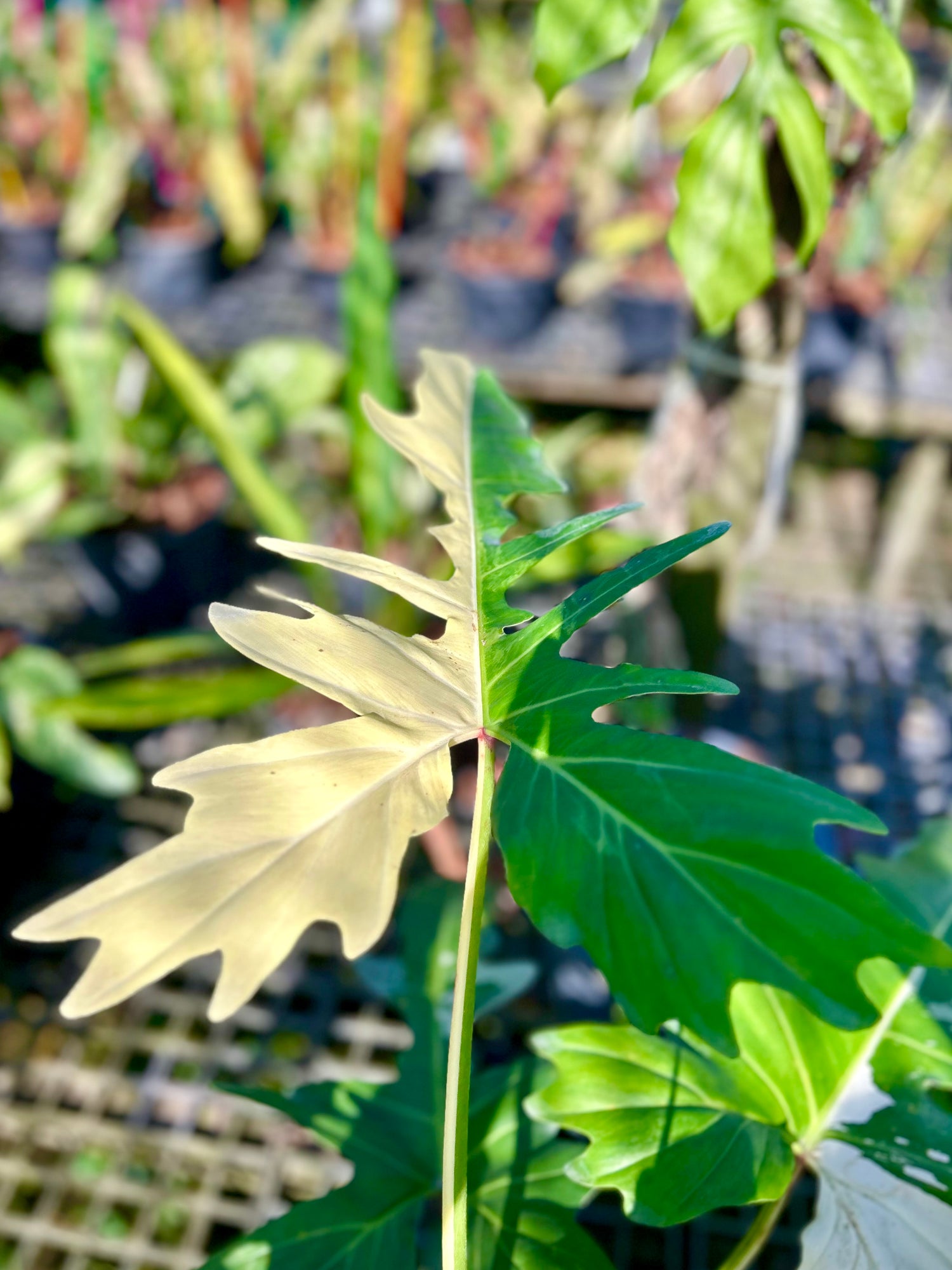


Why isn't my Alocasia bulb growing?
Why isn't my Alocasia bulb growing?
Dormancy is not a failure
When your Alocasia corm shows no signs of life, the first reaction is often to think it's dead. However, in most cases, it's simply dormant.

As long as the corm is firm and dense, it is alive. Germination depends on a hormonal trigger linked to heat and humidity. If these conditions are not met, regrowth can be delayed by several weeks.
Insufficient or unstable temperature
Optimal germination occurs between 25 and 30 °C. Below this range, abscisic acid, the hormone that maintains dormancy, remains active for longer.
Cool nights or significant temperature variations between day and night considerably slow down the process. In Europe, this factor is often underestimated.
Maintaining a constant temperature is essential to activate the cytokinins responsible for growth.
Uncontrolled humidity
An Alocasia corm needs a humid but never waterlogged environment.
Some people attempt germination in substrate. The problem doesn't lie with the substrate itself, but with the difficulty of maintaining a constant balance. With evaporation, it can become too dry and prevent germination. Conversely, if it is too waterlogged and poorly oxygenated, the corm can rot.

Materials like stratum can work, but results vary greatly depending on moisture management. This variability explains many failures.
Lack of oxygen
An environment that is too saturated with water and lacks air circulation promotes mold and rot. The corm needs oxygen to activate its roots.
In a puddle method, the water must be changed regularly. If it stagnates, it loses its dissolved oxygen and becomes unsuitable. For the Root Starter, open it once every two days for 5 minutes to refresh the air.
Bacterial contamination
Unsanitized hands or dirty equipment can introduce bacteria that cause decomposition.
Strict hygiene is essential when handling Alocasia bulbs .
The solution: stabilize the microclimate
The Root Starter allows you to create a stable environment with over 90% humidity while keeping the corm out of the water.
Horticultural biochar stabilizes the environment and limits bacterial growth. The grid prevents any risk of maceration.
Discover the Root Starter here:
https://greenandwhiteplants.com/products/root-starter
See the detailed tutorial:
https://greenandwhiteplants.com/pages/root-starter-tuto
This stability greatly reduces blockages related to environmental variations.
Should we be worried after several weeks?
If your corm remains firm but doesn't sprout after 3 to 4 weeks, check the temperature and humidity. In an optimal microclimate, germination can sometimes take up to 6 weeks depending on the corm's maturity.
Patience remains an essential component of cultivating rare tropical plants in Europe .
And what happens after germination?
When the roots are visible and the first leaf appears, it is time to repot.
Discover the suitable substrate here:
https://greenandwhiteplants.com/products/substrat-alocasia-professionnel
You can also discover the rare bulbs currently available here:
https://greenandwhiteplants.com/collections/plantes-rares
Conclusion
An Alocasia corm that fails to grow is rarely lost. In most cases, it's a microclimate problem.
Constant heat, controlled humidity and stability are the keys to awakening dormancy and successfully growing your rare tropical plants .
Join our community of enthusiasts on Instagram:
https://www.instagram.com/greenandwhite_plants/ 🌿