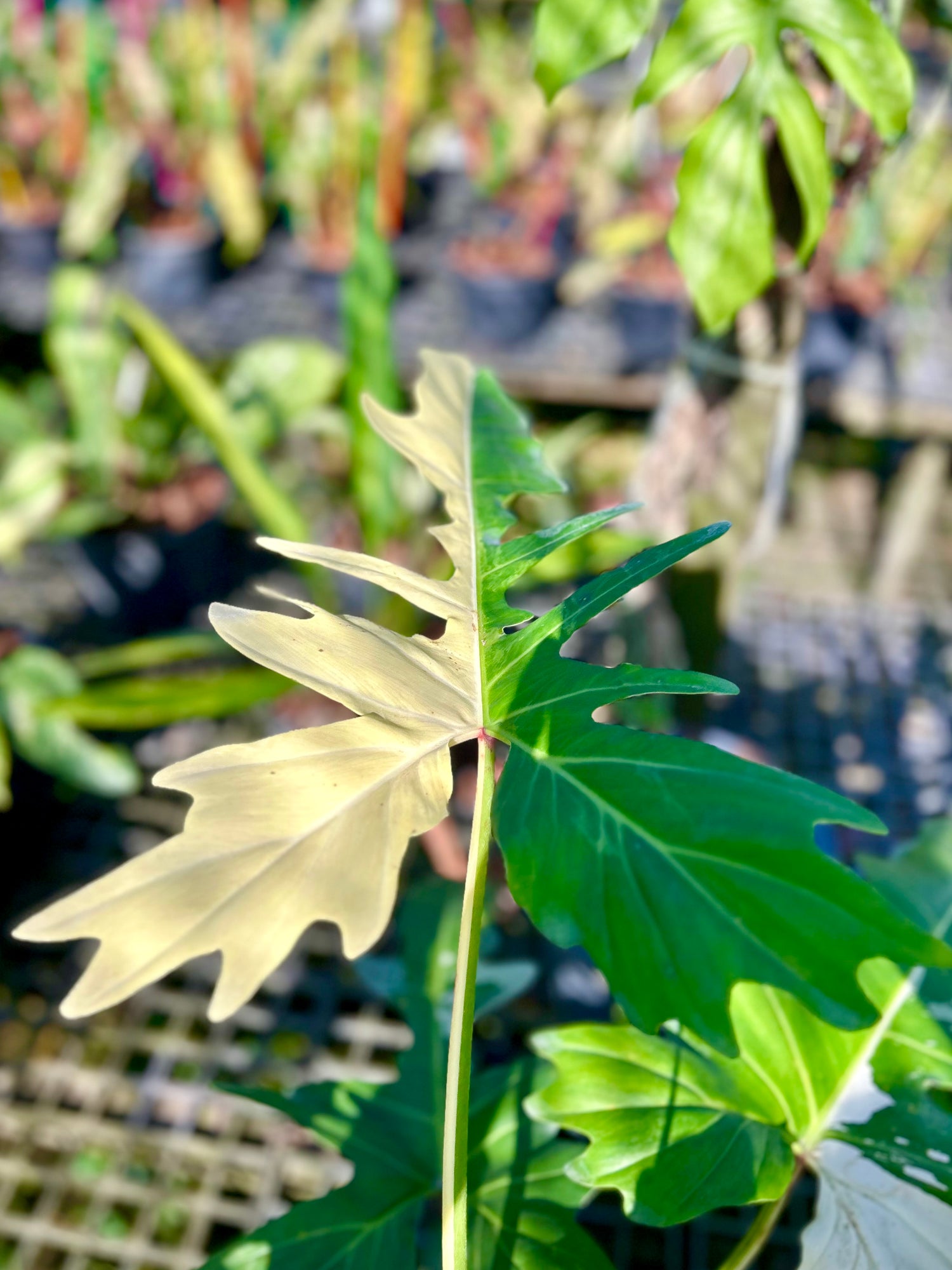


Why are drops falling from the leaves of my alocasia?
Why are drops falling from the leaves of my alocasia?
Your Alocasia isn't crying, it's regulating
Seeing drops falling from the leaves of your Alocasia can be surprising. Many collectors immediately think of a disease or a serious problem. In reality, in most cases, it's a completely natural phenomenon called guttation .
Guttation occurs when the plant expels excess water through tiny pores located at the tips of its leaves. Unlike morning dew, these droplets do not come from the surrounding air; they come directly from the plant.
This mechanism occurs when the roots absorb more water than the plant can evaporate. Alocasia, with its powerful root system, is particularly prone to this phenomenon.
Why does this happen especially after watering?
After generous watering, especially if the substrate retains a lot of moisture, the roots continue to absorb water even when transpiration slows down, particularly at night. Internal pressure then increases within the plant tissues, and the plant releases the excess in the form of droplets.
This happens more frequently when:
-
the substrate remains moist for a long time
-
The ambient air is warm and humid.
-
watering is abundant
Therefore, this is not a sign of weakness. It is a sign of root activity.
When should we start asking ourselves questions?
If guttation is occasional, there's no cause for concern. However, if you experience very frequent, almost daily, dribbling, this could indicate a slight fluid imbalance.
A substrate that is too compact or retains too much water can keep the roots in excessive moisture. In the long term, this increases the risk of root asphyxiation.
A structured mix, composed of draining and breathable elements, naturally stabilizes moisture and reduces excess water. If you have any doubt about the structure of your current potting mix, you can consult a mix specifically designed for Alocasia here:
https://greenandwhiteplants.com/products/substrat-alocasia-professionnel
How to differentiate between guttation and a health problem?
It is important to know how to recognize normal guttation.
The types of gout associated with guttation are:
-
clear and liquid
-
odorless
-
located at the tips of the leaves
On the other hand, if you observe sticky residue, suspicious stains or the presence of insects, it may be a problem with pests such as scale insects.
In this case, the situation is different and requires intervention.
Do you need to change your watering schedule?
Guttation is often a simple indicator that your substrate is retaining moisture well. It doesn't necessarily mean you're overwatering. However, you can fine-tune your watering practices:
Wait until the top layer begins to dry before watering again. Always check the moisture level deep down rather than just on the surface.
A well-structured substrate greatly facilitates this management. It prevents waterlogging while maintaining consistent moisture levels. If you'd like to compare different options suitable for Araceae, you can explore the available solutions here:
https://greenandwhiteplants.com/collections/substrats
In summary
Are drops falling from the leaves of your Alocasia? In most cases:
-
This is guttation
-
It's a natural phenomenon
-
This reflects strong root activity.
Simply monitor the balance between watering and drainage. With a suitable substrate and measured water management, your plant will remain healthy and vigorous.
To continue progressing in Alocasia cultivation and refining your techniques, join us here: