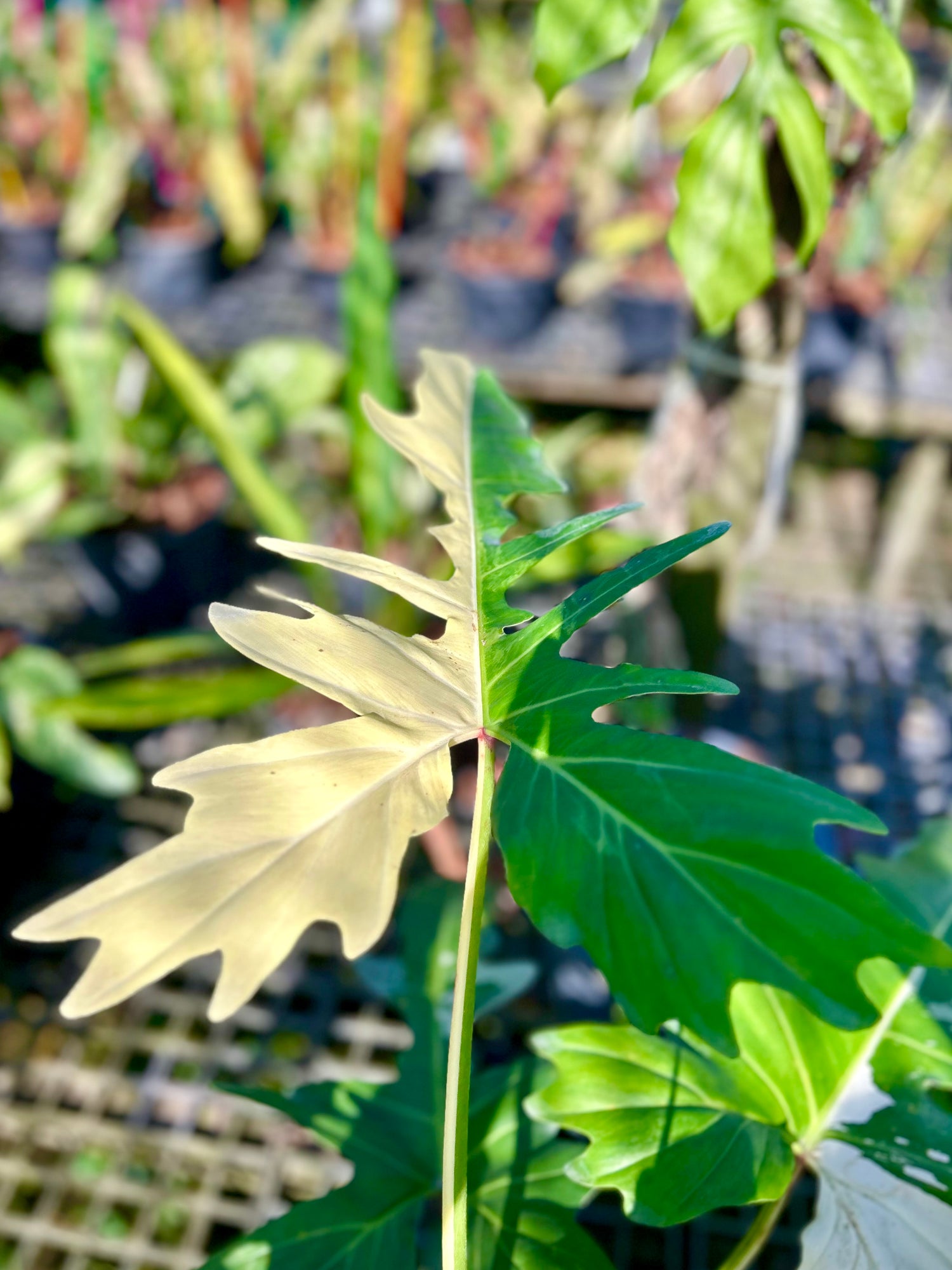


Alocasia Substrate Guide
Alocasia Substrate Guide: Understanding, Choosing, and Mastering the Perfect Mix for Your Rare Tropical Plants
Why the substrate is the foundation of all Alocasia cultivation
The Alocasia , nicknamed elephant ear, impresses with its spectacular foliage and rapid growth. Yet, behind this apparent power lies a more technical reality: its root system is extremely sensitive.
In its natural habitat in Southeast Asia , Alocasia grows in soils rich in decomposed organic matter, very aerated, moist but never saturated and constantly oxygenated.
In Europe, the majority of failures stem from an unsuitable substrate. Overly dense potting soil leads to:
-
root asphyxiation
-
stagnant water
-
bacterial development
-
rhizome rot
To successfully grow rare tropical plants indoors , it is essential to recreate this subtle balance between humidity and oxygen.
Alocasia substrate composition: balance, respiration and stability
A good Alocasia substrate is not simply a well-draining mix. It must stabilize moisture, prevent compaction, and support consistent root development.
The ideal composition is based on a mineral and breathable structure:
Hydroponic clay pebbles
They stabilize the substrate and allow for even moisture management without excess. Unlike traditional potting soil, they prevent the formation of saturated areas and ensure even water distribution.
Perlite
Perlite regulates hydration and limits compaction. It maintains air pockets essential for root oxygenation, especially in potted plants.
Biochar
Biochar contributes to the natural purification of the environment. It helps limit the growth of undesirable bacteria while supporting beneficial microbial life. It also plays a role in stabilizing humidity.
Small caliber maritime pine bark
It provides a breathable structure, promotes root oxygenation and replicates tropical forest conditions.
Large caliber pumice
The pumice ensures powerful drainage and optimal water circulation, preventing any stagnation.
This mixture creates an environment:
-
highly ventilated
-
mechanically stable
-
durable over time
-
perfectly suited to Alocasia
If you wish to use this type of professional blend directly, you can find the complete formula here:
https://greenandwhiteplants.com/products/substrat-alocasia-professionnel
Why Alocasia hates traditional potting mixes
Universal potting mixes are often composed primarily of fine peat. Peat is strongly discouraged for environmental reasons. Furthermore, in pots, this structure eventually compacts, retains too much water, and inevitably blocks oxygen.
However, Alocasia roots actively respire. The roots are already very fine to begin with. An aerated substrate will allow the roots to spread out more.
When oxygen disappears:
-
the roots are turning brown
-
the leaves are turning yellow
-
growth is slowing down
A structured substrate with mineral elements such as pumice, perlite and clay pebbles prevents this phenomenon.
The role of biochar in the cultivation of rare tropical plants
Horticultural biochar is often underestimated. Yet, it plays a central role in a complete substrate.
Its main functions:
-
Stabilize humidity
-
Improving the quality of the root environment
-
Supporting microbial balance
-
Limiting certain bacterial imbalances
In a potted environment, where the ecosystem is closed, this balance is crucial.
To further your understanding of tropical substrate management, you can consult all the professional mixes available here:
https://greenandwhiteplants.com/collections/substrats
Repotting: a strategic moment to optimize growth
Alocasia grows quickly. Repotting becomes necessary when roots grow out of the drainage holes, water immediately drains from the pot, growth slows, or new leaves become smaller. Repotting should ideally be done in the spring, in a pot 20 to 30% larger and, most importantly, with excellent drainage.
Watering management with a draining substrate
With a structured substrate, watering changes completely.
It's no longer about watering out of habit, but about observing the moisture levels, the lightness of the pot, and/or the texture of the potting mix. The goal is to maintain light and consistent moisture without saturating the soil. A good, well-draining potting mix allows for more confident watering, helps prevent overwatering, and ultimately promotes healthy roots.
Propagation and management of corms
Alocasia multiplies by division of the rhizomes or collection of the corms.
These young, rooted structures require:
-
a very aerated substrate
-
stable humidity
-
excellent oxygenation
A suitable pot facilitates the development of young roots. You can discover a container designed for this delicate stage here:
https://greenandwhiteplants.com/products/root-starter
Common problems related to the substrate
Yellow leaves
Often linked to excess water or a compacted substrate.
Soft leaves
They indicate poor water management.
Guttation (drops on the leaves)
A natural phenomenon indicating strong root pressure. It is not a disease.
In 80% of cases, the problem comes from the ground, not the light.
Ideal environment to complement the right substrate
Alocasia needs:
-
abundant light without direct sunlight
-
at a temperature between 20 and 25°C
-
of high humidity
Avoid:
-
radiators
-
underfloor heating
-
drafts
In summer, the plant can be gradually brought outside, avoiding any thermal shock.
In summary: the substrate is your key to success
To successfully grow your rare plants , remember that the substrate must be structured, draining, stable, breathable, durable.
The combination of clay pebbles, perlite, biochar, pine bark and pumice creates a root environment close to natural tropical conditions.
Mastering the substrate reduces risks, ensures growth, produces larger leaves, and increases the plant's lifespan.
This is the basis of a sustainable culture.
To continue learning and perfecting your cultivation of Alocasia and other rare tropical plants , join us here: