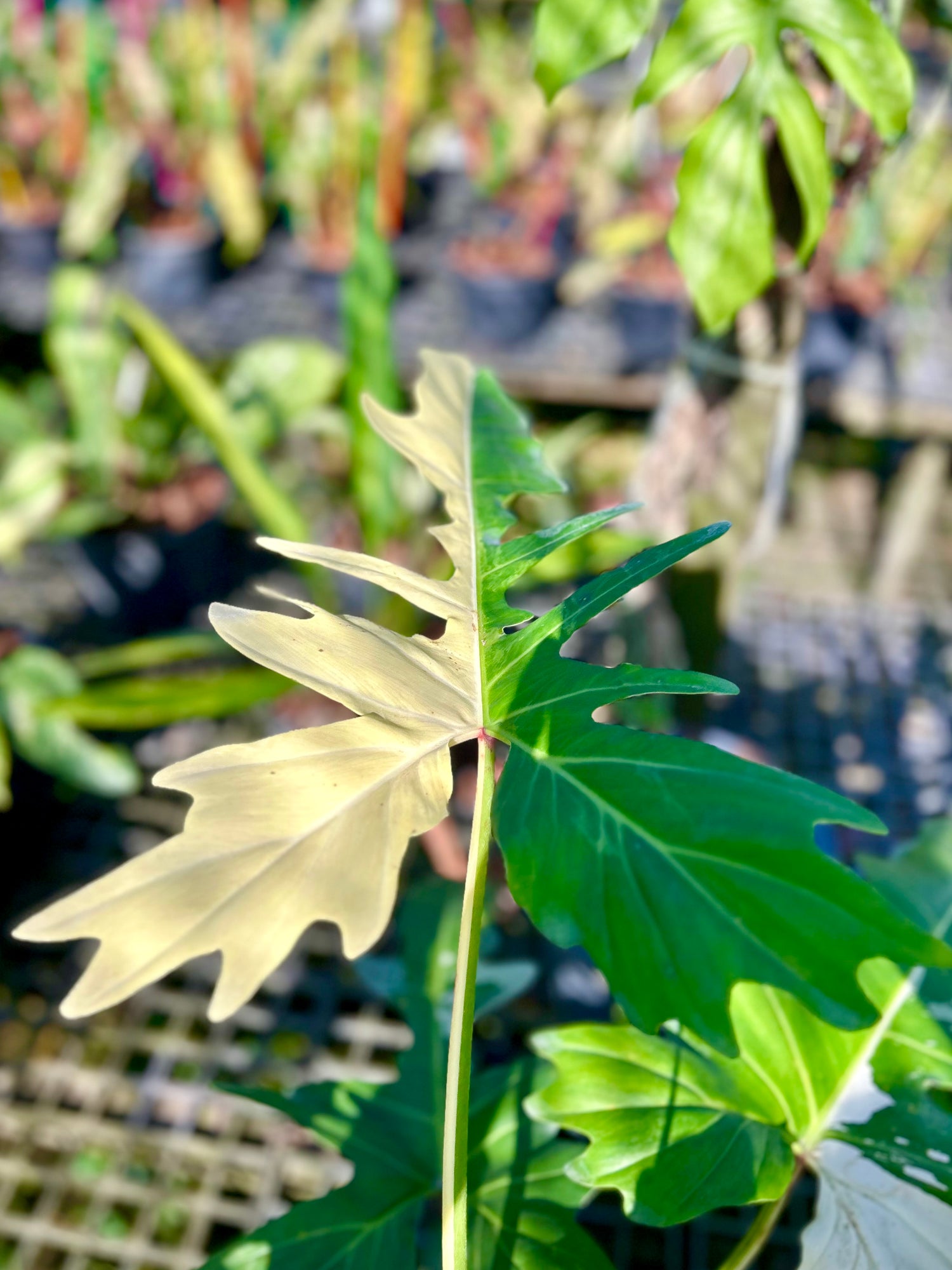


Alocasia bulb/corm germination guide
Alocasia bulb/corm germination guide
Understanding what an Alocasia corm really is
An Alocasia corm is an underground storage organ. It concentrates the energy needed to produce a new plant when conditions become favorable again. Unlike a simple seed, the corm already contains a vegetative structure ready to develop.
In the cultivation of rare tropical plants , the real challenge is not the viability of the corm, but the ability to artificially recreate the natural conditions that trigger its emergence from dormancy.

In its native environment, the corm remains buried in warm, moist, and stable soil. It receives no direct light at the beginning of its development. Germination begins in darkness, supported by a constant microclimate.
Dormancy: understanding hormonal blockage
If a corm doesn't sprout immediately, it's not by chance. It's kept dormant by a plant hormone called abscisic acid . This hormone acts as a biological brake.
For growth to begin, this natural brake must be reduced. This occurs when the temperature is stable between 25 and 30 °C and the ambient humidity exceeds 90%. Under these conditions, the concentration of abscisic acid decreases, making way for cytokinins , hormones responsible for cell renewal.
The germination of Alocasia bulbs is therefore primarily a hormonal process triggered by the right environment.
The three reliable methods for germinating an Alocasia corm
Only three methods offer sufficient control of the microclimate. They are all based on a fundamental principle: high humidity, stable heat, and no direct contact with water.
The Root Starter: the most stable and secure method
The Root Starter is designed to create a microclimate with over 90% humidity while keeping the corm out of water.

The kit includes:
• A transparent pot
• Horticultural biochar
• A protective grille
• Identification labels
Biochar plays a vital role. It stabilizes the environment, limits bacterial growth, and maintains a clean root zone. The grid prevents any maceration.
The use is simple: the biochar is moistened up to the edge of the grid, the corm is placed on top without contact with the water, then the pot is closed to maintain the moisture.
This closed system avoids abrupt microclimate variations, the main cause of failure in Europe.
Discover the Root Starter here:
https://greenandwhiteplants.com/products/root-starter
See the detailed tutorial:
https://greenandwhiteplants.com/pages/root-starter-tuto
The controlled puddle in a closed pot
This method consists of maintaining a very thin puddle of water at the bottom of a closed pot, taking strict care to ensure that the corm never touches the water.
It thrives thanks to high ambient humidity, but it requires regular monitoring. The water must be changed to prevent oxygen depletion.
It can give excellent results, but it is less stable than the Root Starter.
Sphagnum moss slightly damp
Sphagnum moss should be wrung out like a damp sponge, never soaked. It should remain light and airy.
Sphagnum moss that is too wet promotes rot. If it is too dry, it blocks cell regeneration.
This method requires constant attention and perfect humidity management.
Why we never recommend substrate germination
Some people try to germinate their Alocasia corms directly in a substrate. It is precisely in this type of cultivation that the most failures are observed.
A substrate can inhibit hormonal activation and gradually dry out the corm if watering is not carefully managed. It can become hard, wrinkled, and lose all viability. A substrate that is too wet can cause maceration.
This lack of stability explains why this method generates significant losses. That is why it is never recommended here.
The three methods mentioned above allow for precise control of the microclimate and drastically reduce risks.
Temperature: the decisive factor
Maintaining a constant temperature between 25 and 30 °C is essential.
Significant variations disrupt the hormonal rhythm of the horn. A night that is too cool can delay the emergence from dormancy.
Thermal stability is particularly important in Europe where the differences between day and night can be significant.
Lighting: when to introduce it?
As long as the first leaf is not visible, light is useless. The corm does not photosynthesize.
Relative darkness promotes microclimate stability and limits algae growth.
When the first green tip appears, you can introduce a soft, indirect light.
Hygiene and handling
Bacterial contamination is a common cause of failure.
It is essential to handle corn berries with clean hands. Simple disinfection significantly reduces the risks.
The biochar in Root Starter also contributes to stabilizing the environment.
How long is the wait ?
On average, the first roots appear between 10 and 20 days.
The first leaf may emerge two to four weeks later, depending on the size of the corm and the stability of conditions.
Patience remains essential. As long as the corm is firm, it is alive.
When to repot after germination?
When the roots measure several centimeters or the first leaf is well developed, it is time to switch to a growing medium.

Only at this stage should you use a substrate suitable for Alocasias .
Discover the suitable substrate here:
https://greenandwhiteplants.com/products/substrat-alocasia-professionnel
This transition must be done delicately so as not to stress the young roots.
The most common mistakes
Insufficient heat slows germination. Excess water causes rot. Lack of ventilation promotes mold growth.
The majority of failures in Alocasia corm cultivation stem from an unstable microclimate.
The Root Starter provides a warm, humid and controlled environment, perfectly suited to collectors of rare tropical plants in Europe .
Conclusion: Mastering the microclimate is key to success
The germination of Alocasia bulbs/corms is not a matter of luck, but of stability.
Constant heat, saturated humidity, water/bulb separation and rigorous hygiene constitute the ideal formula.
Discover the Root Starter here:
https://greenandwhiteplants.com/products/root-starter
See the full tutorial:
https://greenandwhiteplants.com/pages/root-starter-tuto
Prepare the pot with the appropriate substrate:
https://greenandwhiteplants.com/products/substrat-alocasia-professionnel
Join our community of rare tropical plant enthusiasts on Instagram:
https://www.instagram.com/greenandwhite_plants/ 🌿