

How to propagate a Begonia?
How to propagate a Begonia?
Why propagate a Begonia
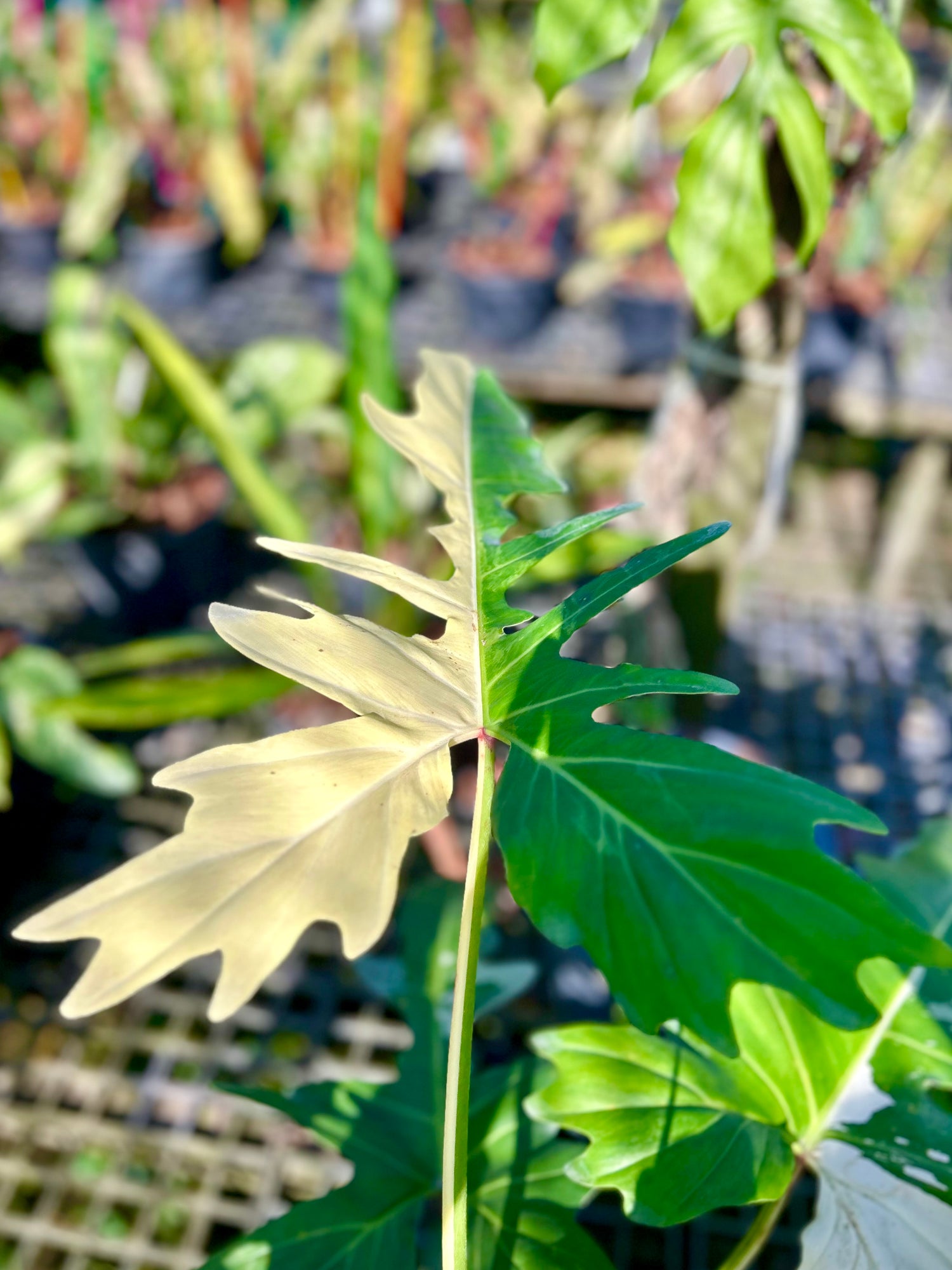
The Begonia is among the most fascinating plants for collectors of decorative foliage. Its asymmetrical leaves, unique textures, and varied colors make it a particularly sought-after plant in the world of rare tropical plants in Europe .
Propagating a Begonia not only allows you to obtain new plants for free, but also to preserve a variety you particularly appreciate. This practice is also very useful for rejuvenating a plant that has become too large or for sharing your collection with other enthusiasts.
Unlike some more demanding tropical plants, Begonias are very well suited to vegetative propagation. Some species can even be reproduced from a simple leaf fragment.
The different methods for propagating a Begonia
The method used depends mainly on the type of Begonia you are growing. Some species have creeping rhizomes, others upright stems, and some produce tubers.
The most common methods are:
-
leaf cuttings
-
stem cuttings
-
the division of rhizomes or tubers
Each technique makes it possible to produce new plants while preserving the characteristics of the mother plant.
Leaf cuttings
Leaf cuttings are one of the best-known methods for propagating Begonias, especially rhizomatous varieties such as Begonias with decorative foliage.
To perform this technique, choose a healthy, well-developed leaf. Cut it with its petiole, then plant the petiole in a slightly moist, well-aerated substrate.
The leaf can also be laid flat on the substrate, with small incisions made along the main veins. New plantlets will gradually emerge from these growth points.
This method works particularly well when the plant is placed in a bright, warm and slightly humid environment.
Stem cuttings
Some species, particularly cane-like begonias, multiply very easily by stem cuttings .
Simply cut a stem with several nodes and place it in a slightly moist substrate. Roots will usually form within a few weeks.
To promote recovery, it is advisable to maintain a stable temperature and good light without direct sunlight.
This technique often allows for the production of well-formed plants, which will develop rapidly once rooted.
The division of rhizomes or tubers
Begonias with rhizomes or tubers can be propagated by division .
When repotting, simply and gently separate the parts of the plant, each with its own roots or growth point. Each section can then be replanted in its own pot.
This technique allows you to quickly obtain several plants while rejuvenating the mother plant.
The ideal substrate for successful cuttings
The success of cuttings depends largely on the substrate used . A mixture that is too compact can prevent root formation, while a substrate that is too free-draining can dry out the cutting.
The substrate should therefore be light, airy and slightly moist .
A balanced mixture may consist of:
-
Buffered coconut fiber enriched with Trichoderma , which provides a stable organic base and controlled moisture.
-
biochar , which contributes to the microbiological balance of the substrate
-
buffered coconut flakes , improving the overall structure of the mixture
-
Small-caliber maritime pine bark , promoting root aeration
-
perlite , limiting substrate compaction
-
hydroponic clay pebbles , stabilizing the mixture and regulating humidity
-
New Zealand sphagnum moss , maintaining gentle moisture around the roots
-
Large caliber pumice , ensuring effective drainage
This combination creates an ideal environment for the development of young roots.
Use a substrate suitable for Begonias
To simplify cultivation and maximize the success of cuttings, many growers use substrates specially formulated for tropical plants.
You can discover substrates suitable for different tropical plants here:
https://greenandwhiteplants.com/collections/substrats
And if you are looking for a mix specifically designed for Begonias:
https://greenandwhiteplants.com/products/substrat-begonia-professionnel
These substrates offer an ideal structure for root growth and the development of new plants.
The ideal conditions for successful multiplication
For multiplication to work correctly, it is important to respect certain conditions.
Begonia cuttings prefer a bright environment but without direct sunlight. Soft light stimulates growth while preventing the tissues from drying out.
Temperature also plays an important role. A temperature of around 18 to 22 °C promotes rapid root development.
Humidity should remain moderate but constant. The substrate should never dry out completely during the rooting phase.
How long does it take to get a new plant?
The rate of rooting varies depending on the species and the method used.
Stem cuttings can produce roots in just a few weeks. Leaf cuttings, on the other hand, may require a little more patience before producing new plantlets.
Once the roots are well developed, the young plants can be repotted into an individual pot and grown like adult Begonias.
An ideal method for collectors
Propagation is a practice much appreciated by enthusiasts of rare tropical plants . It allows them to expand their collection, exchange plants with other enthusiasts, and preserve certain particularly decorative varieties.
Begonias, with their spectacular foliage and numerous botanical forms, offer a fascinating playground for collectors.
With a suitable substrate , soft light and controlled watering, propagation becomes a simple and very rewarding method.
Join us on Instagram
To discover our tips, tropical plants and substrates suitable for rare plant collections, join us on Instagram:
https://www.instagram.com/greenandwhite_plants/