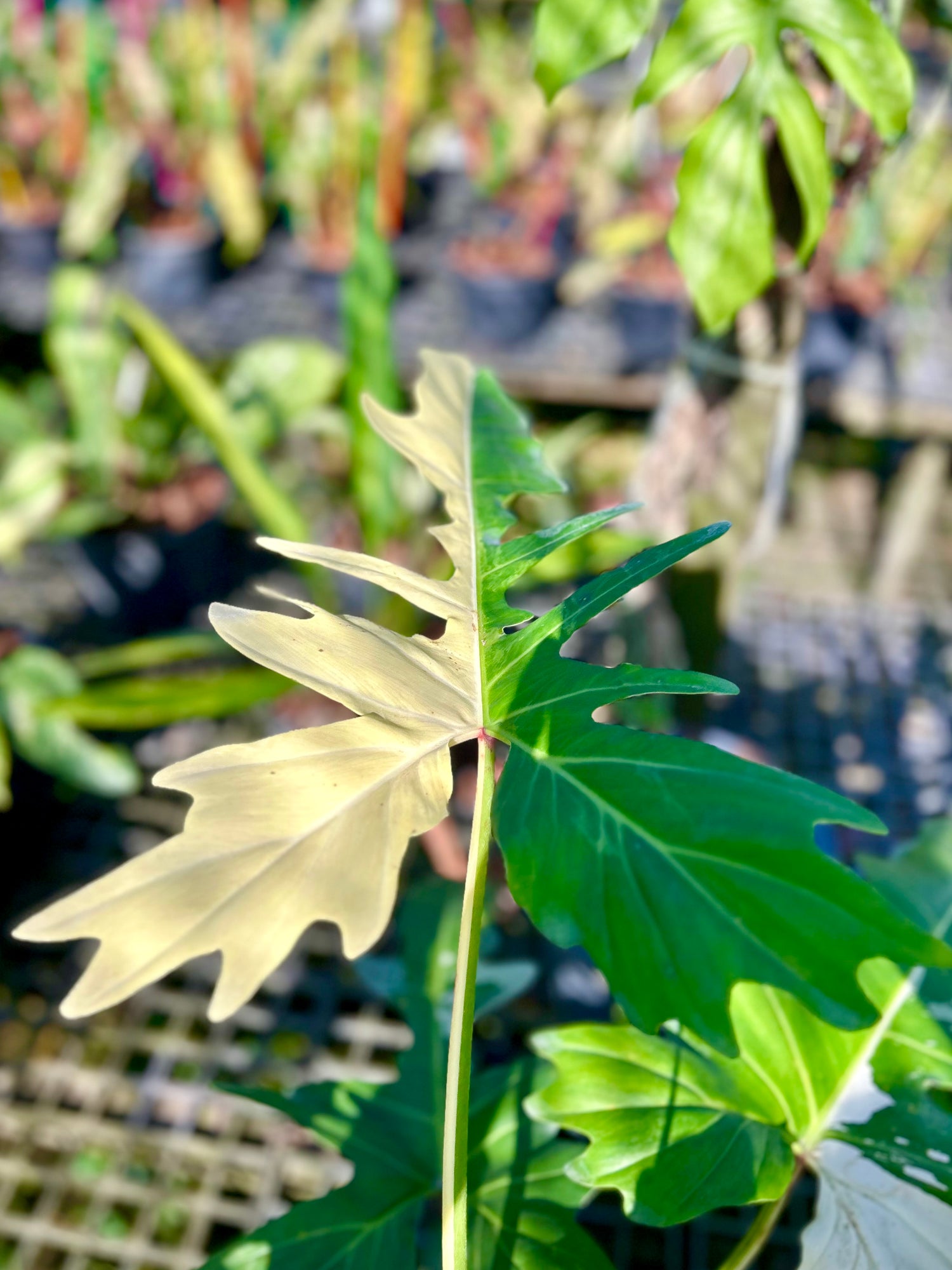

How to care for an indoor begonia?
How to care for an indoor begonia?
Why grow a Begonia indoors?
Begonias are among the most popular tropical houseplants. Their diversity is impressive: some varieties have colorful leaves with spectacular patterns, while others produce delicate blooms for several months.
In temperate regions of Europe, indoor cultivation makes it easier to recreate the climatic conditions necessary for their development. Temperatures are more stable there, and the plants are protected from periods of frost.
Some varieties are particularly well-suited to home cultivation, notably rhizomatous begonias , rex begonias , and cane-like begonias. Their striking foliage makes them true decorative pieces for any interior.
The ideal light for an indoor Begonia
Light is essential for the health of the Begonia. This plant appreciates bright but indirect light .
A location near an east- or west- facing window is generally ideal. This allows the plant to receive sufficient light without being exposed to the intensity of direct sunlight.
Too much sun can cause leaf burn, especially in varieties with decorative foliage. Conversely, insufficient light can lead to stunted growth and less colorful foliage.
Finding the right light balance is therefore one of the first factors in the success of growing rare tropical plants indoors .
Watering Begonias Indoors
Watering is often the main difficulty in growing Begonias.
These plants prefer a slightly moist substrate, but they do not tolerate overwatering. Overwatering can quickly lead to root rot , especially in rhizomatous varieties.
During the growing season, it is generally recommended to water approximately once or twice a week . The frequency may vary depending on the room temperature, light levels, and pot size.
Before each watering, it's best to check the moisture level of the substrate. If the surface is still damp, it's best to wait a few more days.
It is also recommended to use water at room temperature to avoid thermal shock to the roots.
The importance of a suitable substrate
Choosing the right substrate for Begonia is essential to maintaining the plant's long-term health.
A suitable substrate must be:
-
lightweight and airy
-
draining
-
capable of retaining gentle moisture
A balanced mixture can be composed of several complementary elements.
Buffered coconut fiber enriched with Trichoderma forms a stable organic base that maintains controlled moisture while promoting beneficial biological activity for the roots.
Biochar contributes to the microbiological balance and participates in the natural purification of the substrate.
Buffered coconut flakes improve the overall structure of the mixture.
Small-caliber maritime pine bark promotes aeration and oxygenation of the roots.
Perlite , hydroponic clay pebbles and large-caliber pumice ensure efficient drainage and limit substrate compaction.
New Zealand sphagnum moss helps to maintain constant moisture around the roots.
Thanks to this balanced structure, the substrate makes it possible to recreate an environment close to that of tropical soils where Begonias naturally develop.
Choose a suitable substrate for your Begonias
If you are growing several rare tropical plants , it may be worthwhile to use substrates specifically designed for each type of plant.
You can discover different substrates suitable for tropical plants here:
https://greenandwhiteplants.com/collections/substrats
For a mix specifically designed for Begonias:
https://greenandwhiteplants.com/products/substrat-begonia-professionnel
These substrates help maintain a balanced root environment, which is particularly important for plants grown in pots.
Repotting Indoor Begonias
Repotting is an important operation to maintain the vigor of the plant.
Over time, the substrate compacts and loses its drainage capacity. The roots can then lack oxygen, which slows the plant's growth.
Annual repotting, usually in spring , allows the substrate to be renewed and provides the roots with a healthy environment.
The new pot should be slightly larger than the old one and have drainage holes to remove excess water.
Foliage maintenance
The foliage is often the most spectacular feature of Begonias. To keep it healthy, a few simple steps are all it takes.
Regularly removing damaged or yellowed leaves helps stimulate the growth of new shoots.
Wilted flowers can also be removed to encourage the formation of new flowers.
Unlike some tropical plants, it's best not to spray water directly onto the foliage . Stagnant moisture can encourage the development of diseases.
Preventing diseases
Begonias can sometimes be susceptible to certain fungal diseases, especially when humidity is too high and air circulation is poor.
Diseases such as botrytis or powdery mildew usually appear when conditions become too humid.
Good air circulation, a well-draining substrate and controlled watering generally help to greatly limit these problems.
An ideal plant for lovers of decorative foliage
Begonias are now highly sought after in the world of rare tropical plants in Europe . Their diversity of shapes, colors, and textures makes them particularly prized by collectors.
With proper care, these plants can thrive for many years and produce spectacular foliage that transforms an interior into a veritable tropical garden.
Join us on Instagram
To discover our tips, plants and substrates dedicated to rare tropical plants , join us on Instagram:
https://www.instagram.com/greenandwhite_plants/