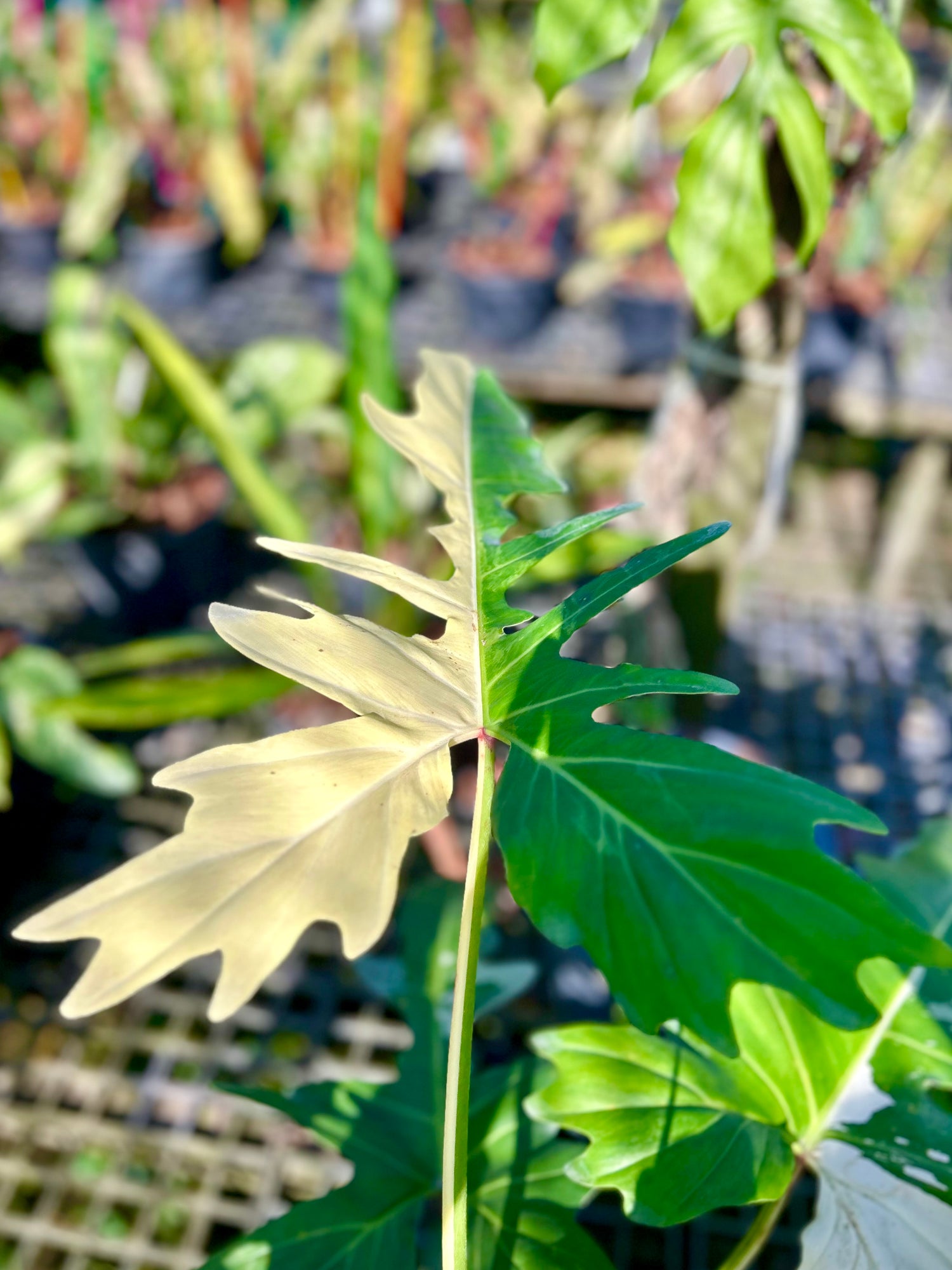


How to properly repot your houseplants?
Why repotting is important for houseplants
Houseplants , and especially rare tropical plants , grow in a limited space when cultivated in pots. Over time, their roots gradually fill the available volume, and the potting mix can lose some of its properties.
When the substrate becomes too compacted or the roots lack space, the plant may slow its growth. The leaves may also become smaller, and the plant may show signs of stress.
Repotting houseplants refreshes the potting mix and provides the roots with a more favorable environment for growth. This process also promotes better absorption of water and nutrients.
When should you repot a houseplant?
The ideal time to repot an indoor plant generally depends on the plant's growth rate.
Young tropical plants may need repotting every year to give them enough room to grow. Mature plants, on the other hand, can remain in the same pot for several years before needing a change of potting mix.
There are certain signs that can help identify when repotting becomes necessary.
• the roots emerge through the drainage holes
• plant growth slows down
• The substrate dries very quickly after watering
When these signs appear, it is generally advisable to renew the substrate in order to give the roots more space.
Late winter or early spring is generally the ideal time for repotting. At this time, the plant enters its growth phase and can adapt more easily to its new environment.
The role of the substrate in repotting
When repotting a houseplant , the choice of substrate plays a crucial role. A well-structured mix allows the roots to develop properly while maintaining a good water balance.
A substrate for tropical plants must offer several advantages: it must retain moisture while allowing efficient drainage and good air circulation.
Buffered coconut fiber enriched with Trichoderma provides a stable base that promotes moisture and biological activity around the roots.
Hydroponic clay pebbles add structure to the mix and help with moisture management.
Small-caliber maritime pine bark improves substrate aeration and promotes root oxygenation.
Biochar helps to maintain a balanced microbiological environment.
The buffered coconut chips add flexibility to the substrate structure.
Large caliber pumice allows for efficient drainage and facilitates water circulation.
Finally, perlite limits substrate compaction and improves air-water exchange around the roots.
This combination of elements makes it possible to obtain a substrate perfectly suited to the cultivation of rare tropical plants indoors .
Steps to successful repotting
Repotting must be done delicately in order to preserve the plant's root system.
Start by choosing a pot slightly larger than the previous one to provide new space for the roots.
Next, remove the plant from its pot by gently tapping the bottom to loosen the root ball. If some roots are very compact, you can gently loosen them with your fingers.
Add a first layer of substrate to the new pot, then place the plant in the center. Fill in around the root ball with more substrate, gently firming it down to eliminate air pockets.
After repotting, water generously to moisten the entire substrate and facilitate root establishment.
Choose a substrate suitable for tropical plants
Using a professional substrate for indoor plants provides optimal conditions for the roots and facilitates the growth of tropical plants.
Discover our complete collection of substrates suitable for tropical plants:
👉 https://greenandwhiteplants.com/collections/substrats
You can also discover our professional substrate for indoor plants , specially designed to offer an optimal balance between drainage, aeration and water retention:
👉 https://greenandwhiteplants.com/products/substrat-plantes-interieur-professionnel-pepiniere
These substrates are developed to promote the growth of rare tropical plants grown indoors .
Give your houseplants a successful repotting
Repotting houseplants is an essential step to maintain a healthy root system and promote vigorous growth.
If you want to provide your plants with a substrate perfectly suited to their needs, discover our collection:
👉 https://greenandwhiteplants.com/collections/substrats
Or explore our substrate for indoor plants:
👉 https://greenandwhiteplants.com/products/substrat-plantes-interieur-professionnel-pepiniere
And to discover even more rare tropical plants , growing tips and new products, join us on Instagram: