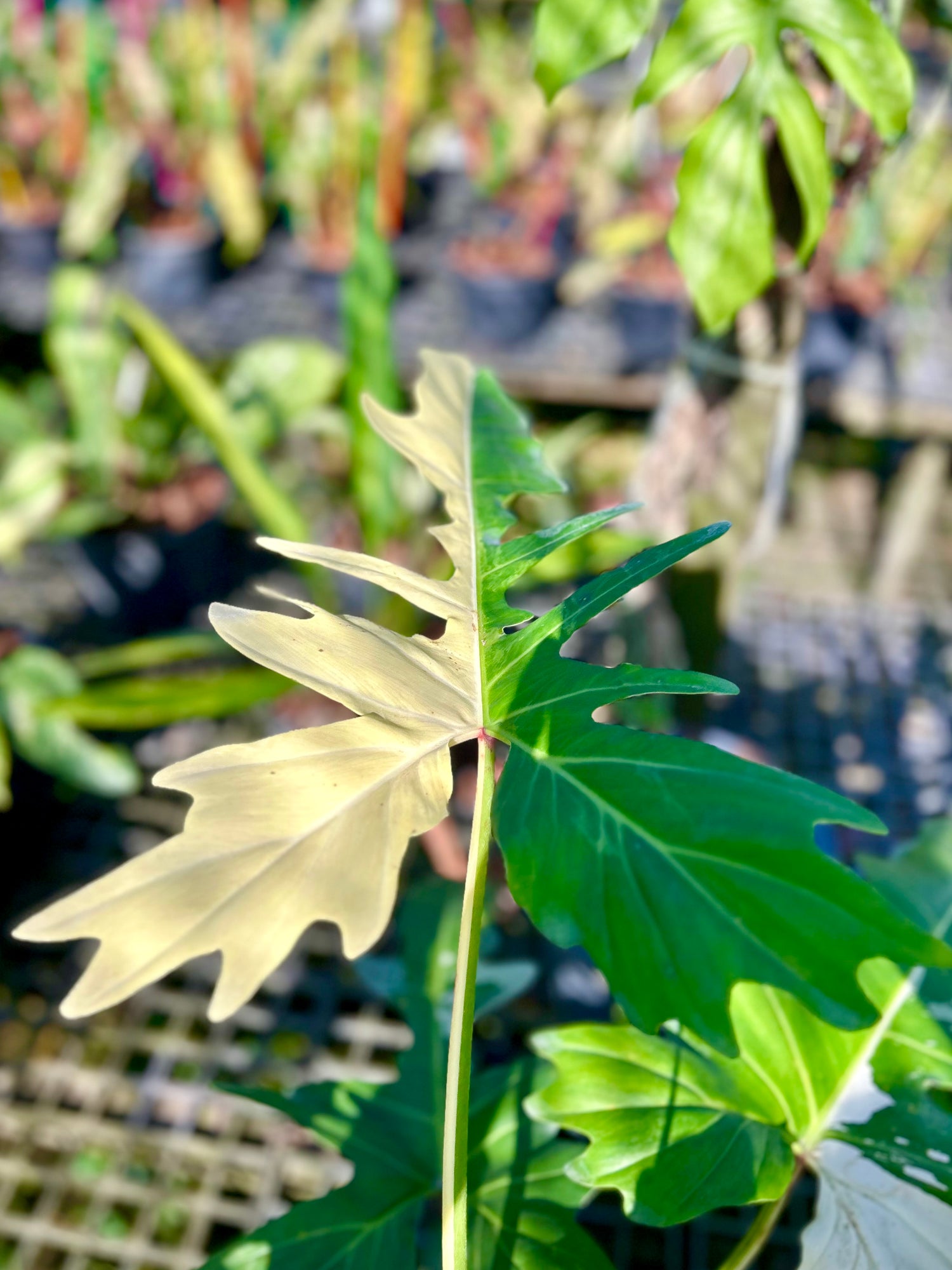


Alocasia zebrina: A guide to the culture and history of this rare European plant
🦓🌿 Alocasia zebrina
History, morphology and premium cultivation of this rare tropical plant in Europe
🌱 Introduction
There are plants that make you smile. And then there are those that capture your heart, without warning. Alocasia zebrina is often like that. You see it once, and you can't forget it.
This article is here to save you time, and above all to help you experience Alocasia zebrina as it deserves: a spectacular rare tropical plant , accessible if you understand its codes, and incredibly rewarding when you see it grow, leaf by leaf, with that elegant shape that transforms a room.
👑📜 Origins and history, a star of European greenhouses since 1862
Alocasia zebrina has a history that speaks directly to collectors. It was spotted and described during a visit to the greenhouses of Veitch and Sons in Chelsea, in a horticultural publication of 1862. And in that same year, on June 11, 1862, it was officially introduced in London at the second major exhibition of the Royal Horticultural Society , where it won a Silver Knightian Medal . Yes, right from the start, it was already being treated as an exceptional plant.
At the time, its price set the tone. Upon its introduction, Alocasia zebrina sold for around $198 . And an even more prized variety, Alocasia zebrina Tigrina Superba , was priced at roughly double that: around $396 . It's easy to see why enthusiasts today refer to it as a tropical collector's plant : it's in its horticultural DNA.
This European heritage is also good news for you. It means the species already has a long history of cultivation outside its natural habitat. The right techniques exist, they are passed down, and this rare Alocasia can be successfully grown in France and Europe , provided its growth cycle and needs are respected.
🍃 Morphology and identification criteria: the zebra attitude in detail
What makes Alocasia zebrina instantly recognizable is its contrast. On one hand, rich, glossy, and striking foliage. On the other, the zebra-striped petioles that give the species its name. The etymology is simple and perfect: zebrina refers to the zebra-like pattern on each petiole.
The plant can be robust, growing up to about 1.8 m tall. Its leaves are arranged in clusters, and the petiole can reach about 1.1 m in length, with a sheath on its lower third. The leaf blade is rather narrowly sagittate, leathery, and glossy green, with a potentially very large anterior lobe. The primary veins are present in variable numbers, often between 6 and 10 , and the secondary veining is rather inconspicuous. The posterior lobes are elongated and pointed, and this is an important detail: the leaf is generally only slightly peltate, if at all.
To avoid common confusion in the market for rare tropical plants , keep these guidelines in mind:
• Very distinct and oblique zebra-striped petioles
• Fairly narrow, arrow-shaped leaves
• Long, acute posterior lobes
• Overall elegant appearance, less massive than some large lowland Alocasias
It's a plant that looks sophisticated, but remains easy to understand if you know what to look for. And it's precisely these details that make the difference between an impulse buy and a truly well-considered one.
🌍 Origin, climate and ecology: understanding its true playing field
Alocasia zebrina is native to the Philippines , with a reported distribution on several islands, including Luzon , Mindanao , Leyte , Samar , Biliran and Alabat . It grows in tropical forests at low and medium altitudes, in environments where light is filtered and humidity is present, but not necessarily constantly stifling.
The climatic data associated with its area are typical of a humid subtropical climate:
• Moderate humidity, often around 60 to 70 percent
• Daytime temperatures ranging from approximately 9 to 31 degrees
• Minimum temperatures that do not fall below approximately 7 degrees
• Wet season from October to May
• Drier season from June to October
• Annual rainfall around 1,200 mm
Why this is useful for you in Europe
Because it helps you avoid the classic trap: recreating a saturated jungle with no ventilation. Alocasia zebrina likes humidity, yes, but it likes stability, air movement, and a breathable substrate even more. In apartments, we often made the mistake of compensating for dry air with overwatering. Today, we do the opposite: we stabilize the environment, then water intelligently. And the plant responds much better.
You will see that understanding its original climate is already half the battle.
🎭 Names, synonyms and cultivars: avoid market mistakes
In the world of rare tropical plants in Europe , names change quickly. Sometimes too quickly. Alocasia zebrina has recorded heterotypic synonyms, notably Alocasia liervalii and Alocasia wenzelii . Vernacular or commercial names also circulate, such as Badiang, Handuroi, and even an old catalogue name: Snake Plant, referring to the resemblance of the petioles to snakeskin.
And then there's the sensitive issue: incorrect marketing names. Some fanciful names have been associated with this plant in the trade, which can create confusion among collectors. When you buy a tropical collector's plant , your best protection is morphological observation, not just the label.
In terms of varieties, Alocasia zebrina exists in sought-after forms:
• Albo, aurea, mint variegation
And in terms of cultivars, two names often appear in collections:
• Alocasia zebrina Tigrina Superba
• Alocasia zebrina Reticulata
If you're looking for a rare variety, keep this simple rule in mind: ask for recent photos, check the stability of the patterns, and beware of overly dramatic names. In the European market for rare tropical plants , thoroughness makes all the difference.
🪴 Growing plants in France and Europe: the plant addict method that really works
The Alocasia zebrina is a spectacular plant, but it doesn't need magic. It needs a setting. The real secret in Europe is consistency.
Substrate
You want a rich, moist substrate, but never one that's waterlogged. The winning combination is:
• A light organic base
• An aerated fraction that maintains pockets of oxygen
• A stable structure that does not compact
That's precisely why our premium substrates exist.
Watering
The goal: constant humidity, not excess. Ask yourself these questions:
• Is the pot still heavy?
• Is the substrate moist throughout?
• Does the air circulate well around the plant?
Light
Bright, indirect light is ideal. Too much shade slows growth. Too much direct sunlight causes the leaves to scorch.
Temperature and humidity
Aim for stability. Below 10 degrees Celsius, the plant suffers. Between 60 and 70 percent humidity, with ventilation, is a very good balance.
The pot
Avoid using a pot that's too big. It's a common mistake. The plant is tall, so we tend to oversize. But the roots don't like swimming in unnecessary moisture. Adjust the pot size to the root system, and you'll have a more stable, faster-growing, and healthier Alocasia zebrina.
🌿 In short
Alocasia zebrina is an iconic , rare tropical plant , originally bred for collectors, but perfectly cultivable in France and Europe if you provide it with stability, air circulation, and a suitable substrate . Its horticultural history is prestigious, its morphology is unique, and its variegated forms are among the most sought-after in the world of rare Alocasias .
Table summary
| Key point | Key takeaways |
|---|---|
| Origin | Philippines with several islands |
| Signature | Striped petioles, narrow, arrow-shaped leaves |
| Size | Up to approximately 1.8 m in good conditions |
| Climate | Humidity 60 to 70 percent, stability |
| Variations | white , yellow , speckled yellow |
| Cultivars | Tigrina Superba , Reticulata |
| Common mistake | Pot too big, substrate too suffocating |
Do you want a unique Alocasia zebrina, personalized advice, or a quick diagnosis?
• Contact Green and White Plants via Instagram
https://www.instagram.com/greenandwhite_plants
• We are available 7 days a week to help and answer your questions
• Suggest your blog topic ideas to us; we love writing for your passion and for the entire community
Fancy getting your hands on a rare new tropical plant?
• Pre-orders
https://greenandwhiteplants.com/collections/precommande
• Stock in France, 24-hour delivery
https://greenandwhiteplants.com/collections/plantes-rares
Need a substrate that will truly transform the lives of your Alocasias?
• Our premium substrates:
https://greenandwhiteplants.com/collections/substrats
👉 Join us on Instagram: greenandwhite_plants 🌿✨