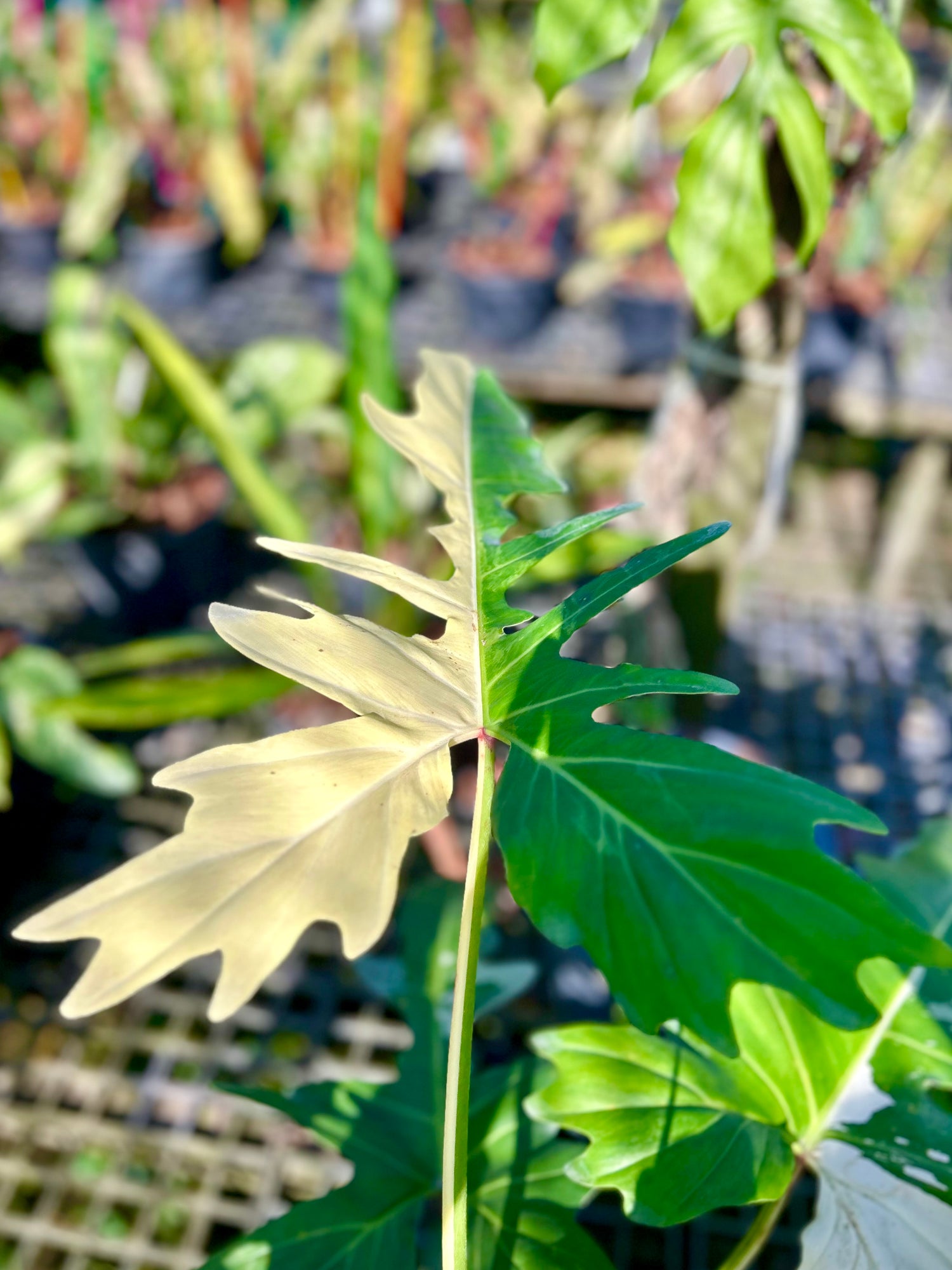


Alocasia Cuprea, a rare tropical plant, care and cultivation
Alocasia Cuprea
An iconic, rare tropical plant with metallic foliage, perfect for passionate collectors.
Introduction
There are plants that mark a before and after in the journey of a plant addict . Alocasia Cuprea is one of those that you never forget.
This plant is more than just decorative. It intrigues, it raises questions, it prompts us to understand the link between the natural environment , ecology , suitable substrate , and controlled cultivation . And that's exactly what enthusiasts of rare tropical plants are looking for.
Early botanical descriptions and nomenclatural history
Alocasia Cuprea was first described in 1854 under the name Caladium cupreum by K.H.E. Koch in the Index seminum of the Berlin Botanical Garden. At that time, the botany of Araceae was still being structured, and many rare tropical plants were poorly classified.
In 1859, it appeared in England under the name Gonatanthus cupreus , before being widely disseminated in horticultural literature under the name Alocasia metallica from 1860 onwards. In France, this name remained in use until 1861, particularly after the publication of detailed illustrations of its inflorescence in L'Illustration Horticole .
It was ultimately the German botanist Karl Koch who grouped these different names under a single accepted name in 1861.
Alocasia cuprea
This nomenclatural instability explains why, even today, many collectors confuse Alocasia Cuprea , Alocasia Metallica and certain forms of Alocasia macrorrhizos .
Botanical synonyms and common confusions
In the world of rare tropical plants , Cuprea is a textbook case of synonymy.
Homotypic synonyms
• Caladium cupreum
• Gonatanthus cupreus
Heterotypical synonyms
• Alocasia metallica
• Caladium metallicum
• Caladium veitchii
These historical confusions have long fueled misidentification in cultivation. We ourselves, in our early days, bought plants labeled Cuprea that weren't actually Cuprea. With experience, one learns to observe the textures , the veins , the sheen of the leaf blade , which are far more reliable than the label.
Geographical distribution and natural origin
Alocasia cuprea originates from Indonesia, specifically Borneo, with confirmed sightings in the regions of Sabah and Sarawak. However, its long history of cultivation makes it difficult to determine whether some populations are strictly native or partially naturalized.
Recent studies have revealed its distribution as far north as Kalimantan. This wide geographical adaptation partly explains its cultivation tolerance , a point often underestimated by European enthusiasts.
For enthusiasts of rare tropical plants in France , understanding this origin helps to avoid common cultivation mistakes.
Original climate and environmental parameters
In its natural habitat, Alocasia Cuprea thrives in a low-altitude equatorial climate.
climatic characteristics
• Constant humidity between 80 and 90 percent
• Stable temperatures between 23 and 32 degrees
• High annual rainfall, potentially exceeding 4000 millimeters
When we were still growing in an apartment, we thought we had to reproduce those conditions exactly. With hindsight and greenhouse trials, we've realized that stability is much more important than excessive humidity or watering.
Ecology and natural adaptation
Alocasia Cuprea grows naturally on forest slopes, often in rocky areas rich in limestone, sandstone, or ultramafic substrates. Contrary to what its impressive foliage might suggest, its root system is relatively compact.
This characteristic is explained by its adaptation to well-drained soils where water is captured at the surface. The plant then stores this resource in its large, leathery leaves.
This is precisely why aerated and breathable substrates give much better results in cultivation than overly compact mixtures.
Botanical description of the species
Alocasia Cuprea is one of the most visually recognizable Alocasias.
General characteristics
• Adult height up to 80 centimeters
• Thick, slightly creeping rhizome
• Leathery, drooping, strongly veined leaves
The mature leaves resemble plates of oxidized copper, with a metallic sheen unique among rare tropical plants . Young plants display a reddish coloration on both sides, which changes with maturity.
It is often at this youthful stage that collectors fall in love… or begin to doubt.
Variegated forms and horticultural debates
Variegated Alocasia Cuprea are available today.
• White
• YELLOW
• Pink
• Light green
However, as with many rare tropical plants , some of the variegation is likely induced. The recent history of the Philodendron Pink Congo has made collectors more cautious, and rightly so.
A true variegated Cuprea always retains
• Its metallic texture
• Its pronounced ribbing
• Its compact structure
Culture in France and Europe
Good news for European enthusiasts
Alocasia Cuprea adapts very well to controlled cultivation .
Ideal conditions
• Temperature between 20 and 28 degrees
• Bright indirect light
• Moderate and stable humidity
• Judicious watering
We used to make the mistake of overwatering. Today, in greenhouses, we prioritize root respiration. The results are undeniable.
Suitable substrate and root health
A crucial point for successfully growing Alocasia Cuprea is the substrate for rare tropical plants .
A good substrate should
• Be very draining
• Remain moist without being saturated
• Promote root oxygenation
That's precisely why our premium substrates are the solution to all your substrate concerns.
Botanical and horticultural summary
| Element | Detail |
|---|---|
| Name | Alocasia Cuprea |
| Origin | Borneo |
| Climate | Humid equatorial |
| Foliage | Metallic copper |
| Level | Passionate collector |
| Substrate | Aerated and draining |
In short
The Alocasia Cuprea is much more than a decorative plant. It's a piece of botanical history, an icon of rare tropical plants in Europe , and a unique experience for any plant enthusiast. Understanding its origin, ecology, and actual needs completely transforms how it's cultivated.
Need to go further with Green and White Plants?
You can contact Green and White Plants via Instagram
https://www.instagram.com/greenandwhite_plants
We are available 7 days a week to answer your questions and assist you.
You can also suggest your blog topic ideas to us; we will write them for you and for the entire community.
Looking to expand your collection of rare tropical plants?
• Pre-orders
https://greenandwhiteplants.com/collections/precommande
• Stock in France, 24-hour delivery
https://greenandwhiteplants.com/collections/plantes-rares
Need for a substrate truly suited to tropical plants
• Premium substrates cleaned three times
https://greenandwhiteplants.com/collections/substrats
👉 Join us on Instagram: greenandwhite_plants 🌿✨