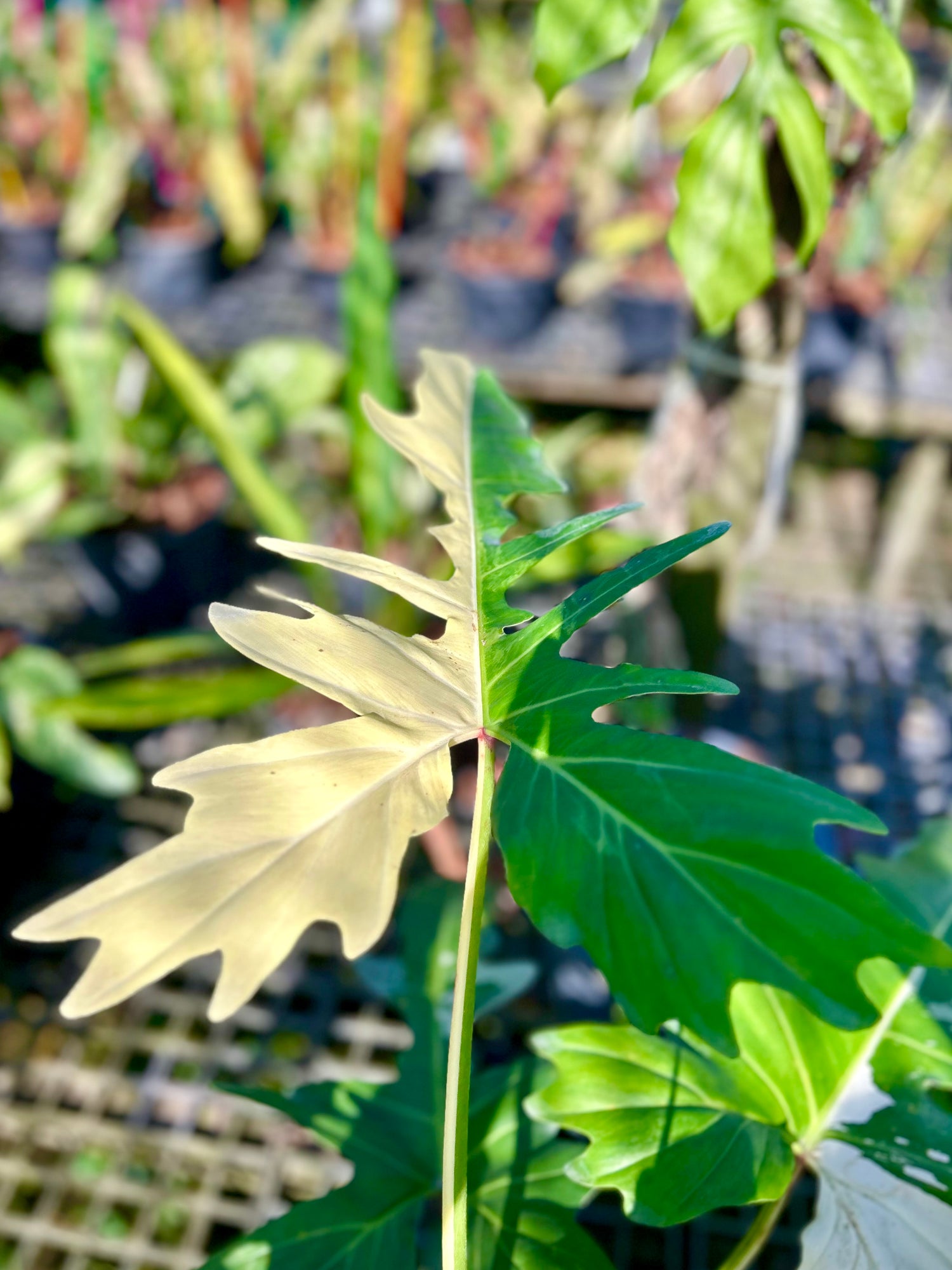


Alocasia baginda, a rare tropical plant: origin and cultivation
🐉✨ Alocasia baginda
The mineral majesty of rare tropical plants
🌱 Introduction
There are plants that seem almost unreal. Plants that give the impression of having been sculpted from stone rather than cultivated in the earth. Alocasia baginda is one of those species that immediately triggers a visual and emotional shock in any plant lover .
Alocasia baginda does not forgive approximation, but it rewards observation and patience like few other species know how to do.
🌍 Geographic origin and natural distribution
Alocasia baginda originates from Indonesia , more specifically from eastern Borneo , in the East Kalimantan region.
This species was scientifically described in 2011, making it relatively recent on a botanical scale, which partly explains its mysterious aura. Unlike many well-documented tropical plants, its exact ecology remains partially unknown , a fact that fascinates both botanists and collectors.
This scarcity of natural information directly contributes to its status as a tropical plant that is particularly sought after in Europe.
🌡️ Natural climate and environmental conditions
Alocasia baginda thrives in an equatorial climate of lowland rainforest .
The natural conditions are extreme and constant:
• High humidity between 80 and 90 percent
• Stable temperatures between 23 and 32 degrees
• Minimum temperatures rarely below 20 degrees
• Very high annual rainfall, between 3,300 and 4,600 millimeters
It is precisely this consistency that poses a problem in European domestic agriculture. We have found that sudden variations are far more harmful than a slight, sustained deviation.
🌱 Ecology and hypotheses of the natural environment
The exact ecology of Alocasia baginda remains to be confirmed, as the species has not yet been definitively relocated in the wild.
However, its closest morphological relatives are closely linked to very specific substrates:
• Limestone rocks
• Ultramafic soils rich in minerals
This explains its thick, leathery, and rigid , almost mineral-like foliage. In cultivation, this information is crucial. A plant originating from this type of environment cannot tolerate compact and suffocating substrates.
This is a mistake we made in our early days, and one that many enthusiasts of rare tropical plants still encounter.
🍃 Detailed botanical description
Alocasia baginda is a compact but robust terrestrial plant, generally measuring 25 to 30 centimeters in height.
Main features:
• Compact habit with a short stem that becomes rhizomatous
• Few leaves, but spread out
• Pale green petiole with white dots
• Very thick, rigid and tough leaf
• Blade broadly oval to suborbicular
• Matte dark green adaxial surface
• Highly contrasting pale grey bubbly areas
• Heavily imprinted secondary ribs
• Pale green reverse with dark red veins
The foliage gives this unique dragon-skin impression, which has largely contributed to its horticultural success.
🌸 Inflorescence and reproductive characteristics
The inflorescence of Alocasia baginda is discreet but of great botanical complexity.
• Inflorescences solitary or in pairs
• Cream to ivory white spathe
• Deep red marking along the margins
• Spadix shorter than the spathe
• Clearly distinct floral zones
• Cream-colored conical appendage
In cultivation, the appearance of an inflorescence is often a sign that the plant is well established. In a professional greenhouse, this becomes a valuable indicator of environmental stability.
🧬 Differences with closely related species
Alocasia baginda is often compared to two other iconic species:
• Alocasia melo
• Alocasia reginula
Key differences:
• Compared to Alocasia melo
• Smooth, not rough leaves
• Deep matte green
• Contrasting pale grey bubbly areas
• Compared to Alocasia reginula
• Absence of very pronounced white veins
• Reverse side not entirely red
• Less black and more mineral appearance
These distinctions are essential to avoid mistakes when purchasing rare tropical plants .
🐉 Cultivars and horticultural appeal
Alocasia baginda is a naturally variable species, but some cultivars have become established in European collections.
The most well-known:
• Alocasia baginda Dragon Scale
• Alocasia baginda Green Dragon
• Alocasia baginda Silver Dragon
Each cultivar expresses the mineral texture of the foliage differently, which explains their immense popularity with collectors.
🧠 Etymology and symbolism
The name Baginda comes from Bahasa Indonesia and means king or majesty .
This choice is not insignificant. It is part of a tradition within the Alocasia genus that aims to highlight the visual and horticultural excellence of certain species. Few plants deserve this title as much as Alocasia baginda.
🪴 Our Green and White Plants Experience
Today we cultivate the Alocasia baginda Dragon Scale.
This journey has taught us one essential thing: the substrate is the key .
Our premium substrates, cleaned three times, have already saved more than 50 plant addicts and satisfied more than 100 enthusiasts looking for a substrate truly suited to rare tropical plants .
📊 Summary table
| Element | Detail |
|---|---|
| Origin | Borneo, East Kalimantan |
| Climate | Humid equatorial |
| Humidity | 80 to 90 percent |
| Temperature | 23 to 32 degrees |
| Foliage | Thick, tough, bubbly |
| Variety | None |
| Use | Premium collection |
🌿 In short
Alocasia baginda is a plant with character.
Mineral, majestic, demanding, it perfectly embodies the world of rare tropical plants .
If you would like to be accompanied:
• We are available 7 days a week
• Contact us on Instagram
👉 https://www.instagram.com/greenandwhite_plants
Suggest your blog topic ideas to us. We write for you and for the entire community.
You can find our Alocasia Baginda Dragon Scale bulbs here:
Also check out:
• Pre-orders
https://greenandwhiteplants.com/collections/precommande
• Stock in France, 24-hour delivery
https://greenandwhiteplants.com/collections/plantes-rares
• Premium substrates cleaned three times
https://greenandwhiteplants.com/collections/substrats
👉 Join us on Instagram: greenandwhite_plants 🌿✨