

PLANTS
ROOT ROT
RETENTION
Biochar per l'orticoltura
Biochar per l'orticoltura
Ideal for:
All types of indoor plants


Impossibile caricare la disponibilità di ritiro
Selected and prepared in France 🇫🇷
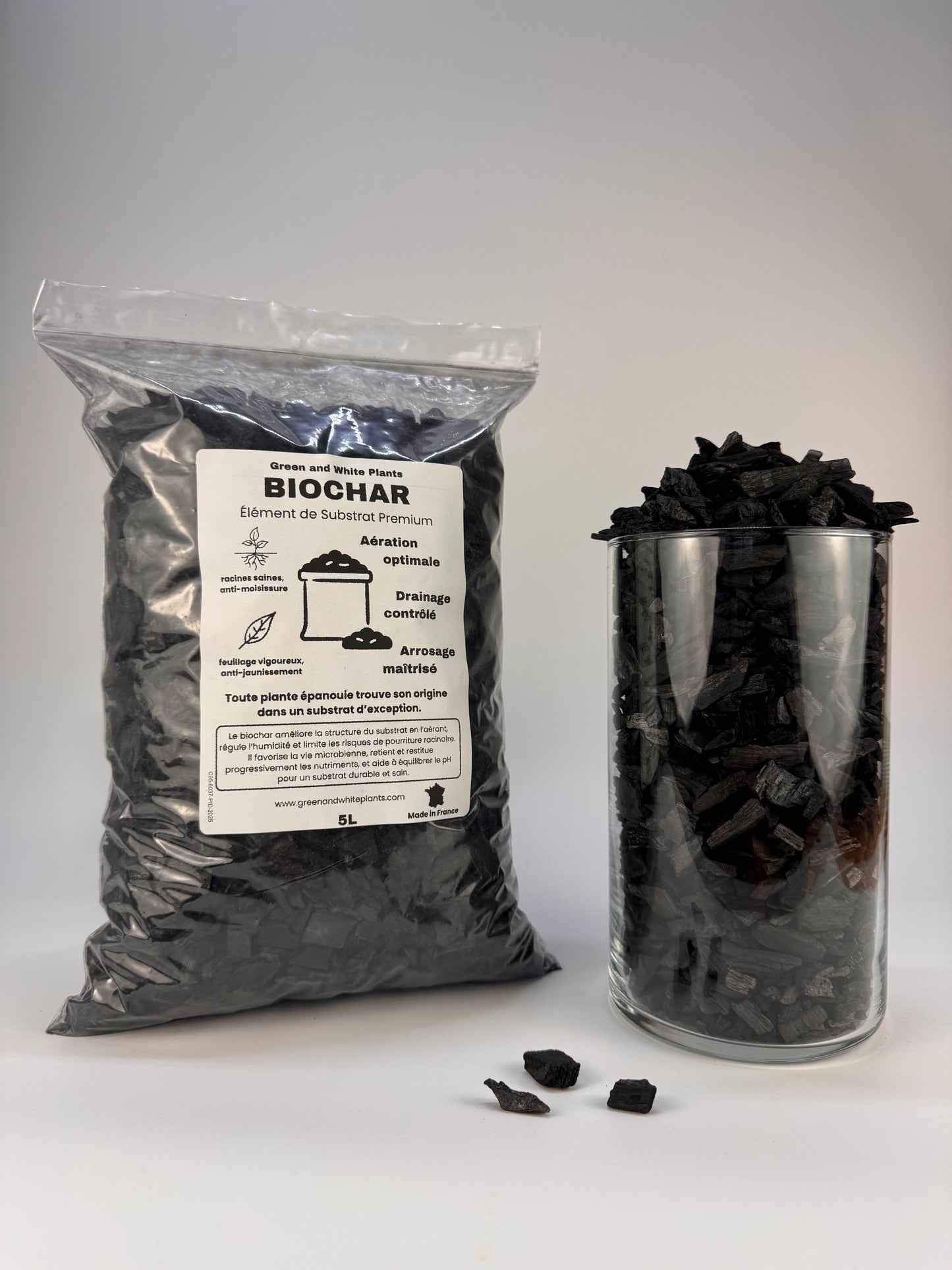
Biochar has become a key component in several of our growing mixes.
During our growing trials between Thailand and France, we studied its behaviour in different substrates to achieve the right balance of porosity, growing-medium stability and airflow.
We selected a horticultural biochar suited to container growing, whether used in specific applications or as part of a substrate blend.
It is then prepared, quality-checked and packed by our team in France.
Thriving Plant Guarantee — 30 days
Our goal is for your plant to thrive when using our products.
If, despite following our recommendations and correctly using our biochar, your plant experiences an irreversible decline, contact us.
We will first guide you in an attempt to stabilise and recover your plant.
If it still cannot be saved, our guarantee provides:
- Refund of the relevant biochar order
- A replacement plant worth up to €100 per order as store credit, usable on one or multiple plants
Main conditions:
- Use the biochar according to our recommendations
- Do not add products that significantly alter the mix without adapting your growing routine
- Follow your plant's main growing requirements, especially watering
- The purchase must have been made directly on greenandwhiteplants.com
Still unsure? Read our customer reviews .
How to use biochar
Biochar can be incorporated directly into your substrate to increase porosity and complement its structure.
Its highly porous structure provides a large internal surface area and can contribute to the management of water, dissolved elements and biological activity within the growing medium.
Composition
A deliberately simple composition: 100% horticultural biochar.
A porous carbonised plant material designed to be used as a component or amendment in growing mixes.
WHAT THEY THINK
We changed their substrate. Apparently, their roots had a few things to say.
Monstera
Finally, a substrate with enough air. My roots had almost forgotten what breathing felt like.
Alocasia
Moist, but not waterlogged. Airy, but not dry. Finally, someone read my requirements.
Anthurium
Drainage, moisture, oxygen… my aerial roots are asking if they can move in too.
Philodendron
A coarse substrate, plenty of air around the roots… great, now give me a two-metre pole.
Homalomena
It stays fresh without turning into a swimming pool. I really wasn't asking for much.
Baby Plant
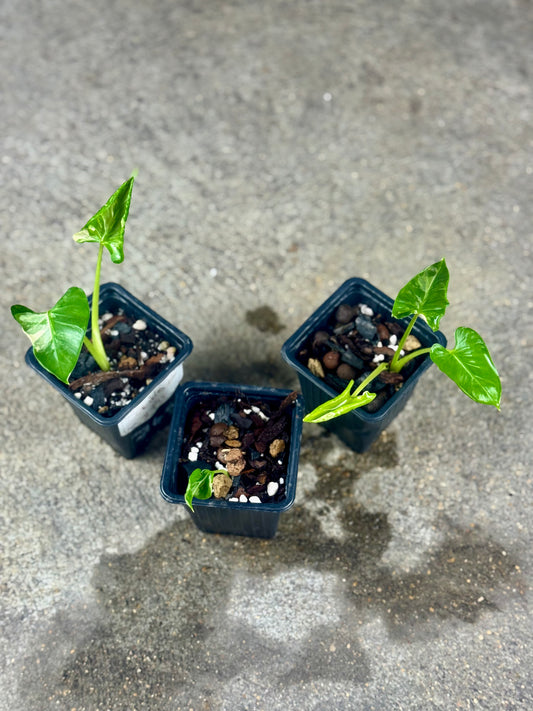
Yesterday I was in a flask. Today I have my own pot. Life moves fast.
Monstera
Finally, a substrate with enough air. My roots had almost forgotten what breathing felt like.
Alocasia
Moist, but not waterlogged. Airy, but not dry. Finally, someone read my requirements.
Anthurium
Drainage, moisture, oxygen… my aerial roots are asking if they can move in too.
Monstera
Finally, a substrate with enough air. My roots had almost forgotten what breathing felt like.
Alocasia
Moist, but not waterlogged. Airy, but not dry. Finally, someone read my requirements.
Anthurium
Drainage, moisture, oxygen… my aerial roots are asking if they can move in too.
Philodendron
A coarse substrate, plenty of air around the roots… great, now give me a two-metre pole.
Homalomena
It stays fresh without turning into a swimming pool. I really wasn't asking for much.
Baby Plant
Yesterday I was in a flask. Today I have my own pot. Life moves fast.
Philodendron
A coarse substrate, plenty of air around the roots… great, now give me a two-metre pole.
Homalomena
It stays fresh without turning into a swimming pool. I really wasn't asking for much.
Baby Plant
Yesterday I was in a flask. Today I have my own pot. Life moves fast.
-
Begonia Maculata Pink Variegata
Prezzo di listino Da €30,00Prezzo di listino -
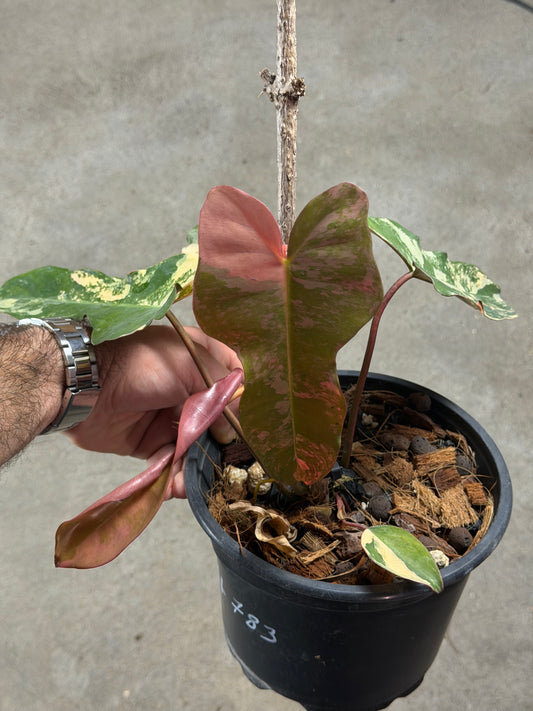
Philodendron Black Billitiae x Florida Beauty
Prezzo di listino €190,00Prezzo di listino€290,00Prezzo scontato €190,00In offerta -
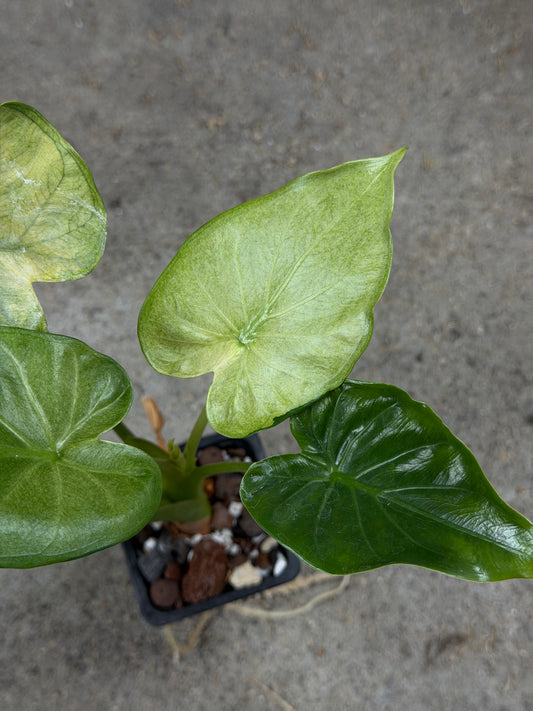
Alocasia Cuculatta « Wagyu » Mint
Prezzo di listino €79,00Prezzo di listino -
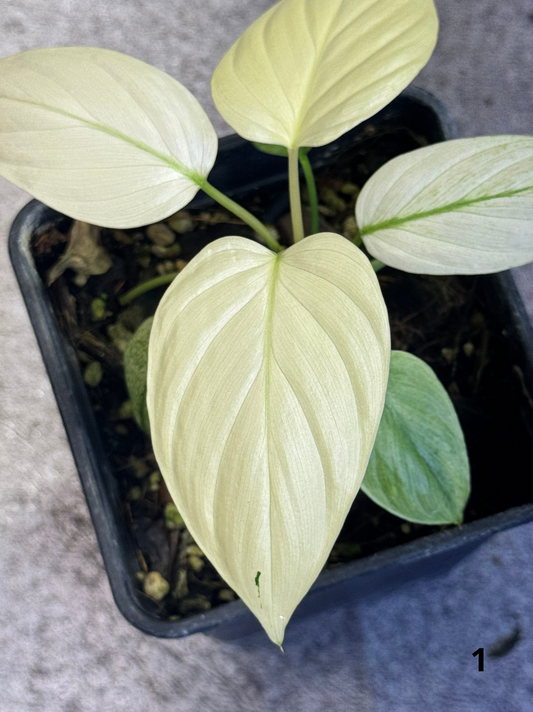
Homalomena Full Mint
Prezzo di listino Da €79,00Prezzo di listino -

 Esaurito
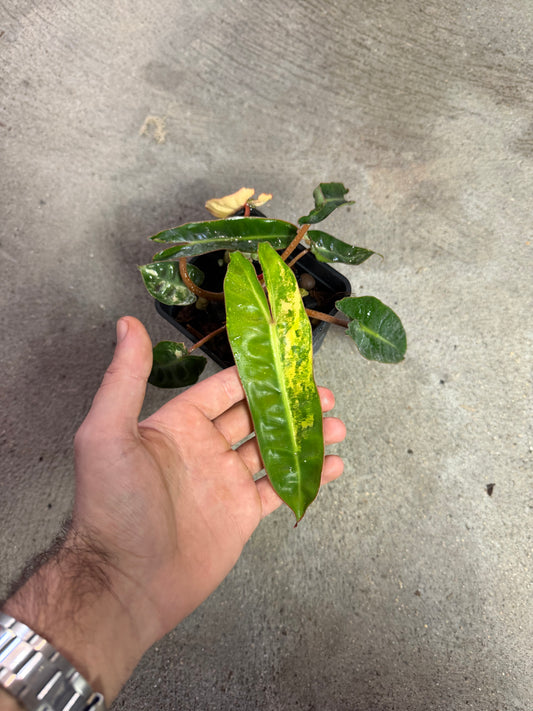
Philodendron Billitiae Variegata
Prezzo di listino Da €59,00Prezzo di listino€79,00Prezzo scontato Da €59,00Esaurito -
Alocasia Wentii Pink
Prezzo di listino €80,00Prezzo di listino -
Homalomena cf. Aromatica « Pink Diamond » Lotto 2
Prezzo di listino €59,00Prezzo di listino€79,00Prezzo scontato €59,00In offerta -
Alocasia Cucullata Crinkless Albo
Prezzo di listino €89,00Prezzo di listino






FAQ
Il biochar è adatto alla mia pianta?
Le piante, siano esse tropicali o temperate, si sviluppano naturalmente in terreni vivi ricchi di carbonio, dove l’aria e l’acqua circolano liberamente attorno alle radici. Il biochar si ispira direttamente a questi ambienti naturali al fine di ricreare, all’interno del substrato, un ambiente aerato, biologicamente attivo e duraturo. Protegge l’apparato radicale dagli squilibri legati all’umidità, favorisce una gestione sana dell’acqua e sostiene una crescita equilibrata, stabile e sicura per tutti i tipi di piante coltivate in vaso.
Quando devo trapiantare la mia pianta?
- Radici che escono dal fondo del vaso
- Un terriccio che si asciuga molto rapidamente tra un’annaffiatura e l’altra
- Una pianta diventata troppo pesante o instabile, che tende a ribaltarsi
- Radici che spingono la pianta verso l’alto e fuori dal vaso
- Un rinvaso consigliato ogni 1-2 anni, a seconda della crescita della pianta
Quanto tempo si conserva il substrato?
Un substrato chiuso, conservato nella sua confezione originale, in un luogo asciutto e al riparo dalla luce, può conservarsi da 12 a 18 mesi mantenendo le proprie proprietà fisiche e biologiche. Una volta aperto, il substrato rimane pienamente utilizzabile per 6 a 9 mesi, a condizione che venga richiuso correttamente e conservato in un ambiente asciutto.
Un substrato utilizzato (già in vaso e irrigato) mantiene una buona efficacia tra i 9 e i 18 mesi, a seconda della pianta, della frequenza di irrigazione e delle condizioni di coltivazione. Oltre questo periodo, la struttura e l’attività biologica diminuiscono progressivamente; si consiglia quindi di trapiantare o rinnovare il substrato ogni 1-2 anni per mantenere un ambiente radicale ottimale. 🌿
Di quanta biochar ho bisogno?
Utilizzate il calcolatore del volume del vaso disponibile nella scheda prodotto per determinare la quantità necessaria.
Cosa fare se la mia pianta non sembra più felice con il nuovo terriccio?
Se la vostra pianta non sembra attecchire in questo substrato, non esitate a contattarci. Vi aiuteremo a diagnosticare la situazione (substrato, irrigazione, luce, ambiente) e a trovare la soluzione più adatta per garantire una crescita sana e duratura della vostra pianta 🌿